
A private investigator may be able to connect a telephone number with a person or business using lawfully available records and corroborating evidence, but a phone number alone does not prove who is using it now. UK investigators do not have automatic access to mobile-network subscriber databases, live location data, private call records or messages. Numbers can be reused, transferred between networks, shared and spoofed. A reliable enquiry verifies the context, tests competing explanations and states what the evidence actually supports.
At Trojan Investigations , we start with the reason the number needs examining: a potential scam, a threatening contact, a disputed business communication or an identity question linked to an existing lawful case. We do not treat a request to identify a stranger as permission to expose their private address or facilitate unwanted contact.
Can a Phone Number Be Traced to Its Owner?
Sometimes a number can be linked to an identifiable organisation, historical listing or individual through independent public information. The critical question is whether that link is reliable and current. A name found beside a number online is a starting lead, not proof of legal ownership or present use.
- The number's format and any publicly documented business association can be checked.
- A client can supply calls, messages or documents they already hold lawfully.
- Public company websites, archived pages and other lawful records may corroborate a claimed identity.
- The age, reliability and independence of every source should be assessed.
- Where attribution remains uncertain, a professional report must say so rather than invent a name.
Why a Telephone Number Does Not Automatically Identify One Person
Numbers are communications identifiers, not a permanent national identity register. A mobile number might belong to an individual, a company handset, a family account, a virtual phone service or a business messaging line. A caller might be using another person's phone. Even when a number was once associated with somebody, it may since have been reassigned.
Ofcom publishes telephone-number allocation information to help manage numbering resources. Those records identify allocation arrangements, not the private identity of every person using an individual number. Network portability also means an original allocation is not a dependable way to identify the current network or account holder.
| Information available | Potential value | What remains unproved |
|---|---|---|
| Number format and prefix | Whether a number resembles a UK geographic, mobile or service number | Who currently uses it, or whether a displayed call truly originated there |
| Public business listing | A declared contact route associated with a company | Whether the caller was authorised by that company |
| Older website or archived page | A historical association and approximate date | Present subscriber or current business relationship |
| Client-held message or call log | Time, displayed number, content and context of contact | The human sender behind the number |
| Publicly visible profile | A possible alias or claimed relationship to the number | That the profile is genuine or belongs to the same person |
| Independent witness information | A first-hand account that may corroborate communication | Complete identity unless independently verified |
What Can a Private Investigator Check Lawfully?
A carefully work coveredd investigation can review the material you already possess, such as an invoice bearing a telephone number, a suspicious marketplace listing, a recorded timeline of calls or messages you received. A company may also have lawfully retained business correspondence that explains who gave a number, when it was used and why.
Investigators can compare relevant public company information, professional listings, official contact details and other genuinely accessible sources. That research must comply with data-protection obligations; being public does not remove the requirement to use personal information for a justified purpose. Our personal investigation services use relevance and safeguarding checks before any identity enquiry begins.
Caller Id Spoofing Changes the Question
Ofcom warns that calling-line identification may be misused to display a number that misleads the recipient about who is calling. Fraudsters may appear to be phoning from a bank, a government department or a person you recognise. Looking up the displayed number can therefore lead to an innocent organisation or individual.
If a call purported to come from your bank, do not ring back using a number supplied by the caller. Contact the organisation through an independently verified official channel. Keep the time of the call, any voicemail, the exact claim made and associated payment requests. An investigation should test the alleged organisation or person, not assume the displayed number proves attribution.
A Number Shown on Your Screen May Not Belong to the Caller
A publicly listed name or a caller-ID app result can be wrong, outdated or manipulated. Never accuse a person, publish their details or arrange a confrontation solely because a lookup connects them with a displayed number.
What About WhatsApp, Signal or Other Messaging Accounts?
A messaging profile may use a telephone number as its sign-in or contact identifier. The account display name, photograph or status is self-presented information and can change. A screenshot of that profile does not prove who operates it, whether the phone number was previously associated with another person or whether a message came from the claimed identity.
Legitimate forensic work may examine messages voluntarily supplied by an authorised account holder. It does not involve covertly accessing a third party's chats, bypassing authentication, cloning an account or demanding that a platform disclose subscriber details without the proper legal process. Encryption and account security are not obstacles a private investigator is entitled to defeat.
Can Investigators Get a Mobile Subscriber Name from the Network?
Not as a routine private service. The network's account information, call-detail records and device-location data are not open-source directories. A private investigator cannot compel a provider to disclose them, borrow police powers or rely on a client saying the information would be useful. Certain disclosures may be available to appropriate authorities under specific legal routes, but that does not create a public lookup for private investigators.
If the number is linked to a serious threat, fraud or suspected crime, keep the evidence and involve police or the appropriate reporting service. Police may assess investigative powers unavailable to a private agency. We can help organise lawfully held material for a client or their solicitor, not substitute for a formal disclosure process.
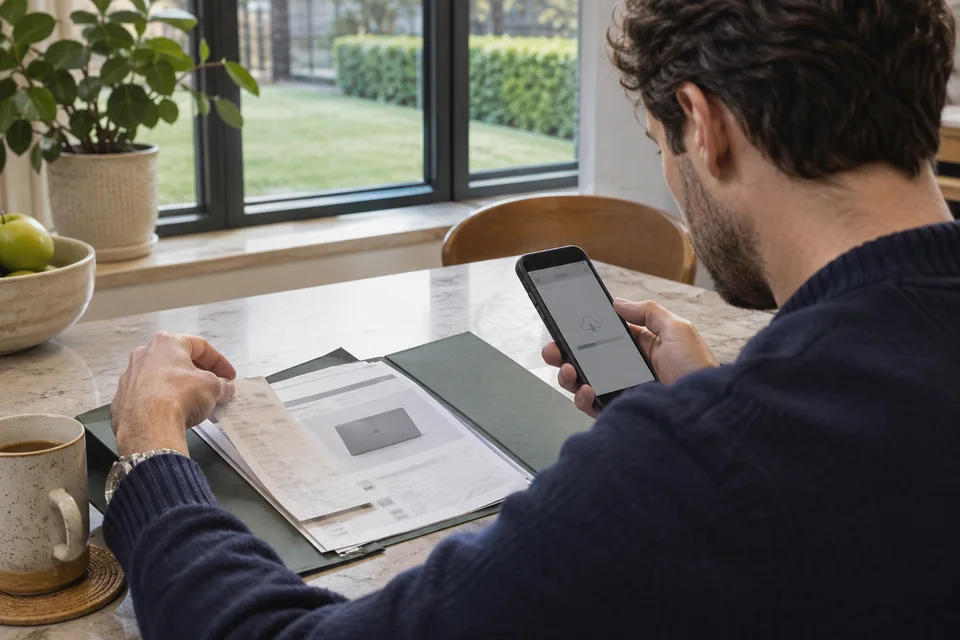
What Evidence Should You Keep Before Contact Details Change?
A Practical Phone-Number Evidence Checklist
- The exact number as displayed, including international dialling code where known.
- Date, time, time zone and whether the contact was a call, text or messaging app.
- Complete original messages and relevant conversation context, not only selected extracts.
- Voicemails, screenshots and attachments in their original form where possible.
- The website, invoice, profile or advert where you encountered the number, with URL and date.
- Any independent business contact route you used to verify a claimed identity.
- Whether you called or replied and what was said, accurately recorded.
- Any police, bank, platform or solicitor reference connected to the incident.
- A note separating confirmed facts from assumptions about the person involved.
If the Number Is Linked to Fraud
A scam enquiry should concentrate on communications, payment instructions, impersonated companies, transaction references and what the recipient was induced to do. The number may be one component of the evidence, but the meaningful question is often how the fraud operated and which independently verifiable details connect the events.
If money has been sent, contact the bank or payment provider immediately through a trusted channel. An investigator cannot freeze the recipient's account or guarantee recovery. Our business investigation work can examine documentary inconsistencies where there is a legitimate commercial question, with urgent financial response left to the bank and authorities.
If the Contact Is Threatening or Unwanted
Safety and Privacy Come Before Attribution
If there is immediate danger call 999. For persistent unwanted calls or messages, Police.uk advises that you do not need to assemble evidence before reporting stalking or harassment. Contact police through the relevant route without waiting for a private trace. We will not accept an identity enquiry that could enable stalking, retaliation or unwanted pursuit.
An apparent number match should never be used to locate or confront someone. If a protective legal process needs a factual timeline, preserve the incoming contacts and discuss the appropriate evidential requirements with the police or solicitor. The need for safety can make disclosure of a person's location inappropriate even if some identity information is lawful to obtain.
How We Assess a Lawful Phone-Number Enquiry
1. Screen the Purpose
We establish why the number matters, who is affected, whether there is a safety risk and what decision the result would assist.
2. Preserve Client-Held Records
We identify original messages, business documents, call dates and other evidence already held with proper authority.
3. Test Public-Source Associations
We check relevant records for possible links, source dates and evidence of an innocent alternative explanation.
4. Corroborate Identity Carefully
We look for independent identifiers and avoid equating a public listing, username or number block with a current human subscriber.
5. Report Findings and Limits
The report explains whether a present association is supported, merely historical or unverified, with no claim to private carrier access.
How Do We Distinguish Historical and Current Associations?
An old online advert can be useful for connecting a phone number to a business at one point in time. It is weaker evidence of present use. We mark the publication or capture date, inspect whether the advert could have been copied and compare it against independent, more recent sources. Where a number has been reused, an outdated listing can implicate an entirely uninvolved person.
A defensible conclusion might read 'the number was publicly advertised by Company A during the stated period' rather than 'Person B is the subscriber today'. Those statements sound similar to a casual reader, but only the first is supported by the public historical evidence. Accurate boundaries protect clients from acting on a false match.
Can a Phone Number Reveal a Live Location?
Not through a legitimate private lookup. A number's geographic prefix may have historical significance for landlines, but it does not reveal the current physical position of a caller. Mobile network routing and internet calling further separate a displayed identifier from a person's location. Claims of instant live tracking from an arbitrary number should be treated with particular caution.
If locating someone is the real objective, there should be a separate lawful and proportionate tracing assessment. The client needs a legitimate purpose, and any current contact or address information must be handled with care. Our legal and litigation support may help a solicitor frame that evidential question without misusing telecoms information.
What Should a Phone-Number Investigation Report Include?
A useful report identifies the number examined, the exact question asked, the relevant jurisdiction and the period of interest. It lists source types, dates and what each source proves; distinguishes information supplied by a client from independently checked material; and records failed or inconclusive checks. Where screenshots are used, source files and capture context should be preserved rather than reformatted into an apparently definitive attribution.
The report should also make clear what was not available: no confirmation from the telecommunications subscriber database, no lawful access to private messages, and no assumption that the displayed caller ID was genuine. That candour is especially important if a solicitor needs to decide whether further formal disclosure is necessary.
A Useful Outcome Can Be Ruling Out a False Lead
Confirming that a number belongs to a legitimate firm's published switchboard, or that an old listing is no longer reliable, may stop a client chasing the wrong individual. Investigation quality is measured by verifiable findings and sensible limits, not by naming somebody at any cost.
When to Instruct a Professional
A professional enquiry may be worthwhile when a telephone number is part of a wider fraud chronology, disputed commercial transaction or solicitor-led case and public material could answer a focused question. A single unidentified nuisance call may be better addressed through blocking, provider support or police reporting where appropriate.
You can book a confidential consultation with the number, why it matters and any messages or documents you lawfully hold. We will explain whether a narrow examination is viable, what it can establish and when another route is more appropriate.
What If a Phone Lookup Website Shows a Name?
Public caller-identification and people-search sites may combine user-submitted tags, old listings, scraped information or reports from other callers. They can be helpful for understanding that a number has been reported as a sales line or suspected scam, but they should not be treated as verified subscriber records. One user's comment is an allegation, and a shared or reassigned number can inherit somebody else's labels.
We would record when the listing was accessed, whether it explains its source, whether the person named has independently verifiable links to the number and whether contradictory information exists. If a record merely repeats an older website, it does not constitute a second independent confirmation. That distinction matters if an enquiry is intended to support a dispute or court process.
What If Someone Is Impersonating Your Company Number?
A business whose number is being spoofed should focus on protecting customers and recording incidents, not attempting to trace callers through prohibited subscriber data. Keep copies of affected customer complaints, dates, displayed numbers, any payment links or demands, and an accurate notice directing customers to independently verified channels. The company's communications provider and appropriate fraud-reporting authorities may be able to advise on response options.
A private investigation can help correlate public scam websites, copied branding and client-supplied evidence, but it cannot promise to stop calls or compel telecommunications providers to reveal the source. A measured report can support a provider complaint, legal advice or a police report without publicly identifying an innocent number holder as the fraudster.
Frequently Asked Questions About Tracing a Phone Number
UK answers on subscriber identity, lawful research, caller-ID spoofing, WhatsApp, call records and privacy.
Can a Private Investigator Identify Someone from a Mobile Number?
Sometimes a lawful public-source enquiry can identify a possible association, but a mobile number alone does not prove who currently uses it. We corroborate identities and clearly state uncertainty.
Can a Private Investigator Find the Registered Owner of Any UK Phone Number?
No. Mobile subscriber account details are not available as a general public lookup. A private investigator cannot compel a network to disclose protected account information.
Can an Investigator Trace a Phone Number to a Current Address?
There is no automatic lawful conversion from a telephone number to a private home address. A legitimate separate tracing question may be assessed, but disclosure and safeguarding limits apply.
Can a Mobile Number Reveal Where Someone Is Right Now?
Not through a legitimate private tracing service. Telephone prefixes, number allocation data and caller ID are not reliable live-location tools.
What If the Caller Has Spoofed a Number?
The displayed number may belong to an uninvolved person or organisation. Preserve the call details, verify claims through an independent channel and do not assume the listed number identifies the caller.
Can an Investigator Read Texts Sent from the Number?
Only where a participant or other authorised source provides them lawfully. Investigators cannot secretly intercept another person's messages or bypass account security.
Does a WhatsApp Profile Prove Who Owns a Number?
No. Names, photos and descriptions are user-controlled and can be false or outdated. Account attribution needs evidence beyond what the profile displays.
Can You Check Whether the Number Is a Business Number?
We may be able to corroborate a number against current public company websites or other lawful listings. That does not establish which employee placed a particular call.
Will an Old Phone-Directory Listing Identify the Current User?
Not necessarily. Listings can be outdated and numbers can be reassigned, shared or ported. Source date and independent confirmation matter.
Can a Private Investigator Obtain Call Records from a Mobile Provider?
Not as a routine private service. Confidential call records and subscriber data are subject to strict rules and cannot be compelled by a private investigator.
Can a Phone Number Be Traced If It Is Withheld?
A withheld number cannot simply be unmasked by a private investigator. Report serious or repeated unwanted calls to police and discuss available protective options with your provider.
What Should I Provide for a Number Enquiry?
The exact number, contact dates, complete messages or voicemails you possess lawfully, relevant transactions, any known profiles and the purpose of the enquiry.
How Long Does a Phone-Number Investigation Take?
Times vary with the quality of lawful sources, the number of leads and the question being answered. Some searches end quickly because a reliable attribution is not possible.
Can Evidence About a Number Be Used in Court?
Potentially, if relevant and properly presented. A solicitor will consider source, reliability, disclosure and whether formal provider evidence is needed.
What If I Am Receiving Threatening Calls?
If in immediate danger call 999. Otherwise report to police without waiting for private evidence collection. A safety-first response is more important than an unsupervised attempt to identify or confront the caller.
Not Sure Where to Start?
Tell us what happened and what you need to establish. We’ll discuss the options before you decide.
BOOK A FREE CONSULTATION