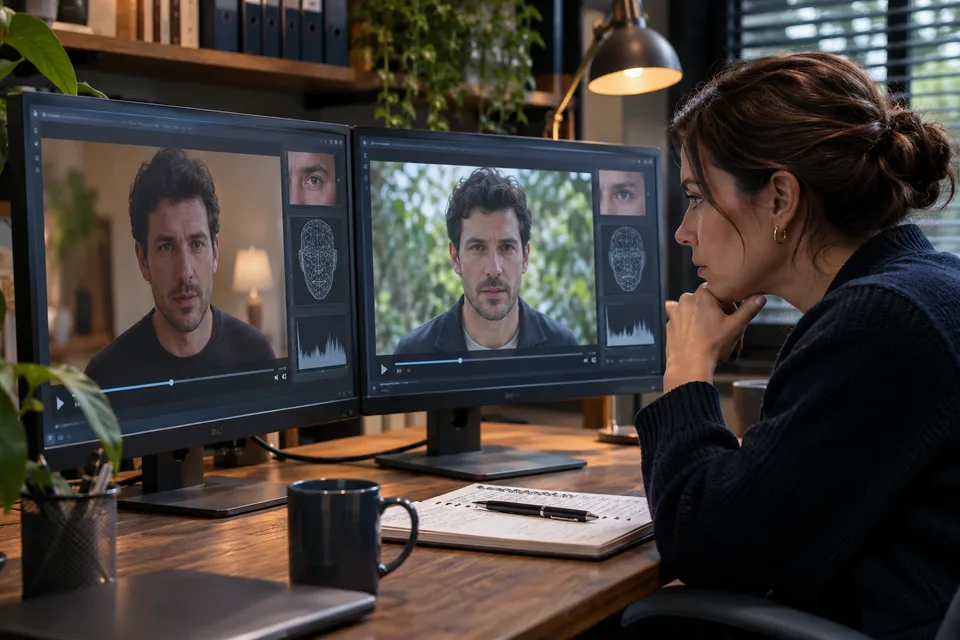
Deepfake and AI impersonation fraud is investigated by preserving the original digital material, checking source and metadata, comparing it with trusted reference material, testing the surrounding account and payment history, and corroborating the content through independent real-world evidence. No single visual glitch, voice anomaly or automated “deepfake detector” should be treated as conclusive on its own.
At Trojan Investigations , we approach synthetic-media allegations as an evidence problem rather than a technology demonstration. The central questions are: what file was actually received, where did it come from, what happened before and after it was sent, who benefited from the communication, and what independent evidence supports or contradicts the claimed identity?
How Do Investigators Verify Suspected Deepfake Evidence?
A sound verification process normally combines several layers:
- preserve the original audio, video, image, email or message in the form received;
- record the source, date, platform, account and surrounding conversation;
- review available metadata and file properties without altering the original;
- compare faces, voices, logos, language, account identifiers and timing against reliable reference material;
- check whether the communication route itself was compromised or impersonated;
- verify urgent requests through a trusted, independent channel;
- test payment details, company records, websites, domains and public identities where relevant;
- use specialist forensic examination when the evidential value justifies it; and
- separate what can be proved from what remains technically uncertain.
The strongest conclusion usually comes from source and corroboration, not from an AI detector score.
3.81m unauthorised fraud transactions were recorded in the UK in 2025 in government evidence published during 2026; this is a broad fraud figure, not a deepfake-only count. £703.4m was lost through those unauthorised fraud transactions in 2025, illustrating the wider scale of identity and authentication abuse. 2026 framework the UK Government launched work on a deepfake-detection evaluation framework to test detection tools against real-world fraud and impersonation threats.Deepfakes Are One Part of a Wider Impersonation Attack
Fraud rarely depends on a synthetic video alone. The attacker may combine a cloned voice with a spoofed display name, a compromised mailbox, copied company branding, an urgent payment instruction and information taken from social media. Looking only at the media file can therefore miss the wider fraud chain.
The Government's 2026 Fraud Strategy identifies generative AI as a tool used to impersonate trusted individuals and organisations. The National Assessment Centre has similarly reported that AI-generated text, audio, images and video are being used to enhance existing fraud types including investment, romance and payment-diversion fraud.
| Evidence layer | What investigators examine | Why it matters |
|---|---|---|
| Original media | Source file, format, compression, visible edits and available metadata | Copies, screen recordings and social-platform downloads may remove useful source |
| Account identity | Email address, username, telephone number, profile history and linked public information | A convincing voice or face does not prove control of the genuine account |
| Communication context | Earlier messages, language, urgency, request pattern and change in behaviour | Fraud often reveals itself through the surrounding sequence rather than one message |
| Payment trail | Bank details, invoice changes, recipient names, wallet addresses or payment references lawfully available to the client | Shows where the impersonation was intended to direct value |
| Independent verification | Contact with the claimed person through a known number or trusted route | Separates identity confirmation from the channel controlled by the suspected fraudster |
| Forensic opinion | Specialist analysis of audio, images or video where proportionate | Can support interpretation but should be reported with limitations |
Preserve the Original Before Forwarding or Editing It
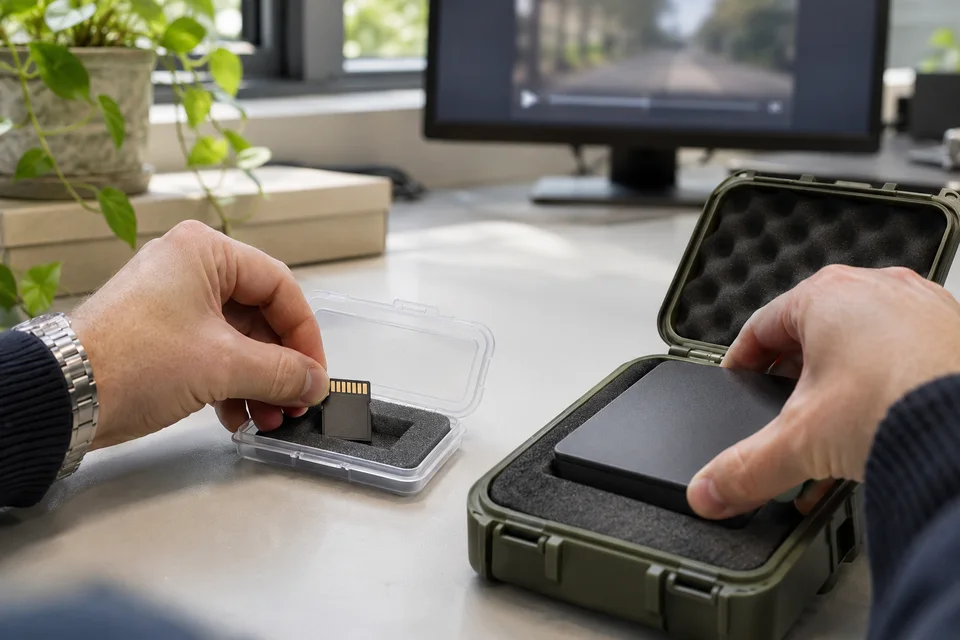
If a clip or message may become evidence, keep the original file and the original communication where possible. Re-exporting, trimming, converting or repeatedly forwarding media can change metadata and introduce new compression. A screenshot may document what was visible to the recipient, but it may not preserve the technical information available in the original.
Record when the material arrived, the account that sent it, the device or system on which it was received, and any action taken afterwards. If money was transferred, preserve the payment instructions, recipient details and bank communications as a parallel evidence set.
What to Preserve After Suspected AI Impersonation Fraud
- the original audio, video, image or message;
- full email headers where email is involved;
- the profile or account URL and visible username;
- telephone numbers and call logs lawfully available to you;
- screenshots showing the surrounding conversation, not just the suspicious item;
- invoices, bank-detail changes and payment requests;
- proof of any payment made;
- the known contact details of the person or organisation being impersonated;
- a timeline of calls, messages and decisions; and
- notes of independent verification calls or confirmations.
Why Automated Deepfake Detection Is Not a Final Verdict
Automated detection can be useful, but the UK Government's deepfake-detection work exists precisely because tool performance varies and needs to be tested against real-world threats. A detector may be affected by compression, low resolution, editing, platform processing, new generation methods or a lack of suitable reference material.
A professional report should therefore avoid statements such as “the software says 92% fake, so the video is fraudulent.” The more defensible approach is to describe the test used, the material tested, the limitations, and the independent evidence that supports the overall conclusion.
A Strange-Looking Video Is Not Automatically a Deepfake
Poor lighting, video-call latency, aggressive compression, frame interpolation, beauty filters, noise suppression and edited clips can all produce artefacts. Conversely, a technically polished clip can still be synthetic. Visual intuition is a lead, not proof.
Voice Cloning Needs Independent Identity Verification
The government's Stop! Think Fraud campaign warns that criminals use AI voice cloning to impersonate trusted people and create urgent payment requests. If the communication asks for money, credentials, a one-time passcode or secrecy, the safest evidential step is to verify the request using a separate contact route already known to be genuine.
That principle matters in corporate cases as well as personal ones. A finance employee who receives an apparently genuine voice or video instruction from a director should not treat voice likeness as authority to change a payment destination.
Investigating Business AI Impersonation
Business cases often involve executive impersonation, supplier-payment diversion, fake recruitment, account takeover or false authority to release data. Our business investigation services can examine the relationship between the synthetic content and the wider transaction: when bank details changed, who approved the request, whether the email domain differed, whether the telephone number was new, and what access logs or internal communications are lawfully available.
The aim is not only to decide whether media was manipulated. It is to establish how the fraud worked and which control failed, so the organisation can preserve evidence and prevent a repeat.

Personal and Relationship Impersonation Cases
Deepfakes also appear in romance fraud, catfishing, harassment and reputational abuse. Our personal investigation services can test public identity claims, profile history, reused images, company claims, aliases and inconsistencies without hacking accounts or accessing private communications without authority.
If intimate or abusive synthetic content is involved, the investigation may also raise safeguarding, platform-reporting and criminal-law issues. The first priority may be preserving evidence and reducing harm rather than attempting to identify the creator immediately.
Private Investigators Do Not Have Police Interception Powers
A private investigator cannot demand confidential subscriber data from a platform, intercept private communications or break into an account to “prove” who created a deepfake. Lawful private investigation is based on information the client is entitled to provide, open sources, authorised digital examination and evidence that can be corroborated without unauthorised access.
When Digital Forensics May Be Needed
A specialist forensic examination may be appropriate when the source file is available and the result could materially affect litigation, employment action, insurance, fraud recovery or a police report. The examiner may preserve a forensic copy, document hashes, inspect metadata and encoding characteristics, compare reference samples and explain the limits of the analysis.
If the issue may enter proceedings, our legal and litigation support should be coordinated with the client's solicitor so the evidence is preserved in the format the legal team actually needs.
How We Structure an AI Impersonation Investigation
1. Define the Claim
We identify exactly what is alleged to be false: the person in the media, the account controlling the communication, the authority behind a payment instruction, or the content itself.
2. Preserve Originals and Chronology
We separate original files from copies and build a timeline of communications, requests, payments and independent confirmations.
3. Test Identity and Infrastructure
Public identities, company records, domains, accounts and known contact routes are checked for consistency and impersonation indicators.
4. Use Technical Examination Proportionately
Specialist analysis is used where it can answer a meaningful question, not merely because a detection tool is available.
5. Report Facts, Limitations and Next Steps
The final report separates verified facts from technical opinion and identifies which questions require a bank, platform, solicitor, insurer or police power rather than private-investigator authority.
The Best Defence Is Independent Verification
When a message asks for money or sensitive information, the most reliable immediate control is often to leave the channel used by the requester and verify through a trusted contact route. That remains valuable even when synthetic media is visually or audibly convincing.
When to Get Professional Help
If a suspected deepfake has triggered a payment, threatened a business, impersonated a family member or may be needed as evidence, preserve it before attempting extensive testing yourself. You can book a confidential consultation so we can define the evidential question and identify what can be established lawfully.
Authentication, Attribution and Fraud Impact Are Different Questions
A strong investigation separates three questions that are often blurred together. Authentication asks whether the media is original, altered or synthetically generated. Attribution asks who created, controlled or sent it. Impact asks what the communication caused: a payment, disclosure of credentials, reputational damage or another measurable event. One question can sometimes be answered while another remains unresolved.
For example, a business may be able to prove that an urgent payment instruction came through a newly created account and resulted in a transfer to a different beneficiary even if the available copy of the voice clip is too degraded for a confident synthetic-media conclusion. The report should preserve that distinction rather than treating technical uncertainty as failure of the entire fraud case.
File Hashes and Chain of Custody Can Strengthen Digital Evidence
Where the original file is important, a forensic practitioner may calculate a cryptographic hash so the preserved evidence can later be shown to be the same file that was examined. The hash does not prove the content is genuine; it helps demonstrate that the evidence has not changed after preservation.
Chain-of-custody notes should record who supplied the material, how it was transferred, when it was received, where the preserved copy is stored and what analysis was performed. This becomes especially important if several people, solicitors or experts will handle the material before a hearing or insurance decision.
Reference Material Must Also Be Trustworthy
Comparing a suspicious voice or face with a reference sample only helps if the reference is genuinely connected to the real person. A clip downloaded from an unverified fan account may itself be edited, while a known corporate video, recorded meeting, public broadcast or file supplied directly by the person may carry stronger source.
Investigators should record where reference material came from and why it is treated as reliable. The same applies to logos, signatures, email templates and executive writing style. Familiarity can support analysis, but it should not be presented as scientific proof.
AI Impersonation Can Target Identity Systems as Well as People
Deepfake-enabled fraud is not limited to persuading a human recipient. Government research notes that synthetic media can be used against identity and age-verification systems, biometric authentication and secure communications. That means the investigation may need to review not only the fraudulent message but also how an account, onboarding process or authentication control was bypassed.
In a corporate case, useful evidence can therefore include account-creation timestamps, login records lawfully held by the organisation, helpdesk contacts, password-reset events and changes to beneficiary or profile information. The private investigator should work with the client's authorised technical team rather than attempting unauthorised access to external systems.
Payment Recovery and Evidence Verification Should Run in Parallel
If money has already moved, do not wait for a full deepfake conclusion before contacting the bank or payment provider and reporting the fraud through the appropriate channels. Recovery opportunities can be time-sensitive. The technical investigation can continue while the financial institution, insurer or police handles powers that a private investigator does not possess.
The same principle applies to compromised business accounts. Security teams may need to reset credentials, revoke sessions and preserve logs immediately while the evidential chronology is being built. Containment should not destroy evidence, so key records should be preserved before systems are wiped or reconfigured where practicable.
What a Professional Deepfake Investigation Report Should Say
A useful report identifies the original exhibits examined, distinguishes copies from originals, records the source of reference material, explains any tools or specialist opinions used, sets out corroborating account or payment evidence and states the limits of the conclusion. It should avoid absolute language where the technical evidence does not justify it.
For litigation or a serious internal decision, the report should also make clear whether the author is giving factual evidence, investigative analysis or expert technical opinion. Those roles are not interchangeable, and a solicitor may need to decide whether formal expert evidence is required.
Frequently Asked Questions About Deepfake and AI Impersonation Investigations
Answers about synthetic media, voice cloning, evidence preservation, attribution, forensic examination and lawful digital investigation.
What Is a Deepfake?
A deepfake is synthetic or digitally manipulated audio, video or imagery made to imitate a real person or event. In fraud, it can be used to impersonate a family member, executive, celebrity, bank or other trusted identity.
Can a Private Investigator Prove a Video Is a Deepfake?
Sometimes an investigator or forensic specialist can identify strong evidence of manipulation, but no single test is universally conclusive. A careful conclusion combines technical examination, source, identity checks and independent corroboration.
Should I Use an Online Deepfake Detector?
It may provide a lead, but its output should not be treated as proof. Detection performance can vary with compression, editing, file quality and new generation methods. Preserve the original before uploading it to third-party tools.
Can AI Clone Someone’s Voice?
Yes. UK fraud guidance specifically warns about AI voice cloning used to impersonate trusted people and pressure victims into payments or disclosure of security information.
What Should I Do If a Director Appears to Request an Urgent Payment by Video Call?
Verify the request through an independently known route, such as the director’s established number or a separate internal approval process. Do not rely solely on the apparent face or voice in the call.
What Digital Evidence Should I Preserve?
Keep the original media, surrounding messages, full email headers where relevant, account identifiers, URLs, payment instructions, call logs available to you and a chronology of what happened.
Can an Investigator Hack the Account That Sent the Deepfake?
No. Unauthorised access to an account or device is not a lawful private-investigation method and may breach the Computer Misuse Act 1990.
Can Metadata Prove Who Created a Deepfake?
Metadata can provide useful context, but it can be absent, altered or stripped by platforms. It should be treated as one evidence layer rather than automatic proof of authorship.
What If the Suspicious Media Was Downloaded from Social Media?
Keep the downloaded file but also preserve the post URL, profile details, date, screenshots and surrounding context. Platform processing may have removed technical data from the original upload.
Can Deepfake Evidence Be Used in Court?
Potentially. The value will depend on relevance, source, authenticity, the way it was obtained and how any expert opinion is presented. A solicitor should guide the evidential requirements for the case.
Can Investigators Identify the Person Behind a Fake Account?
Sometimes public-source and contextual evidence can establish a strong attribution, but private investigators cannot compel a platform to disclose confidential subscriber records. Some identification steps require police or court powers.
Are Deepfakes Only Used in Financial Fraud?
No. They can also appear in romance scams, harassment, reputational attacks, false advertising, extortion, identity abuse and other forms of deception.
What Is the Difference Between a Compromised Account and a Deepfake?
A compromised account is a genuine account controlled by an unauthorised person. A deepfake is synthetic or manipulated media. A fraud can involve either one or both at the same time.
How Quickly Should Suspected AI Impersonation Be Investigated?
Preservation should begin immediately because accounts can disappear, messages can be deleted and payment-recovery options can be time-sensitive. The technical investigation can then proceed in a controlled way.
What Should I Provide to Trojan Investigations?
Provide the original files if available, surrounding messages, known genuine contact details for the person being impersonated, payment evidence, account or profile URLs, dates and a short chronology of what happened.
Not Sure Where to Start?
Tell us what happened and what you need to establish. We’ll discuss the options before you decide.
BOOK A FREE CONSULTATION