

Cohabitation evidence is evidence that helps establish whether two people are living together as a household or in a relationship resembling shared domestic life. It can be relevant in some family-law, maintenance, benefits, housing, inheritance or private disputes, but the legal significance depends entirely on the issue being decided. A few overnight stays or photographs of two people together do not automatically prove cohabitation.
At Trojan Investigations , we investigate cohabitation questions by defining the legal or factual test first and then gathering proportionate evidence around residence patterns, routines and independently verifiable connections. We do not treat surveillance as a substitute for legal advice about what “cohabitation” means in a particular case.
What Can Cohabitation Evidence Include?
Depending on the lawful purpose of the enquiry, relevant evidence may include:
- repeated overnight or early-morning presence observed from public places;
- consistent arrival and departure patterns over more than one isolated date;
- publicly available address or company links;
- lawfully obtained correspondence or documents supplied by the client or solicitor;
- shared travel, routine or domestic activity visible publicly;
- vehicle presence that is corroborated rather than treated as proof by itself;
- public social-media material where relevant and authentic;
- witness information that can be tested; and
- a chronology showing whether the pattern is temporary, occasional or sustained.
The evidential question is usually about a pattern of shared life, not one photograph.
3.5m+ cohabiting couples were identified by the Ministry of Justice in its 2026 consultation on reforms for cohabitants in England and Wales. 47% of people were reported in that consultation as wrongly believing that living together creates a “common law marriage”. 24.3% of people living in a couple in Census 2021 were cohabiting rather than married or civil partnered, up from 20.6% in 2011.Cohabitation Does Not Create a “common Law Marriage” in England and Wales
GOV.UK states clearly that common law marriage does not exist in England and Wales. Unmarried partners do not automatically acquire the same rights as spouses or civil partners simply because they have lived together for a long time or have children.
That distinction matters because clients sometimes ask for “proof of cohabitation” without identifying what legal consequence they expect. The investigator should not promise that evidence will end maintenance, change property ownership or decide a benefits issue automatically.

When Can Cohabitation Evidence Be Relevant?
| Context | Why cohabitation may matter | Investigator's limitation |
|---|---|---|
| Spousal maintenance | A new household and changed finances can be relevant to an application to vary an order | Cohabitation does not automatically terminate every order |
| Financial remedy dispute | Household circumstances may form part of broader needs or resources evidence | The court decides legal weight, not the investigator |
| Benefits investigation | Living-together status can affect means-tested benefits | Private investigators do not make DWP entitlement decisions |
| Housing or tenancy dispute | Occupancy and residence can affect contractual or statutory issues | The relevant tenancy and law must be checked |
| Inheritance claim | Certain cohabitants may have rights to apply under the Inheritance (Provision for Family and Dependants) Act 1975 | Eligibility and financial provision are legal questions |
| Private factual dispute | A party may need evidence of residence patterns or household arrangements | Observation should remain necessary and proportionate |
Spousal Maintenance Does Not Automatically End Because Someone Cohabits
One common misconception is that an ex-spouse living with a new partner automatically cancels maintenance. The position depends on the wording of the order and the circumstances. Citizens Advice notes that a party can ask the court to vary maintenance where circumstances have changed, including where an ex-partner moves in with a new partner and household income changes.
That means the useful evidence may concern the reality and stability of the new household, but the solicitor must decide how it fits the existing order and the law. Our legal and litigation support is therefore most effective when the evidential question comes from the family-law adviser.
One Night Is Not a Household
A person can stay with a partner, house-sit, provide care, visit children or spend weekends together without necessarily creating the legal or factual situation being alleged. Cohabitation evidence should usually be assessed over time and in context.
This is why our relationship investigation services focuses on repeated patterns rather than dramatic single moments. The investigator should record what happened and avoid language that turns an observation into a legal conclusion.
Do Not Use Children to Gather Relationship Evidence
Children should not be questioned, followed, pressured to report on a parent or used to gain access to a home. Where safeguarding or child arrangements are involved, the investigation should be screened carefully and coordinated with appropriate legal advice.
What Surveillance Can and Cannot Show
Lawful public-place observation may show repeated arrivals, departures, overnight vehicle presence, shared journeys or patterns of routine. Our surveillance services can document these facts with dates and times where the instruction is justified.
Surveillance cannot lawfully turn into intrusion inside a private home, interception of communications or secret access to a partner's phone, bank or online accounts. It also cannot establish private financial arrangements simply from outward behaviour.
A Useful Cohabitation Investigation Brief Should Define
- the legal or contractual reason the evidence is required;
- the exact person and address under enquiry;
- the time period that matters;
- what is already known rather than suspected;
- whether the solicitor has identified a particular evidential question;
- any domestic-abuse, stalking or safeguarding concern;
- what types of observation would be proportionate;
- which public records may legitimately assist;
- the deadline for legal proceedings or review; and
- how the final evidence needs to be presented.
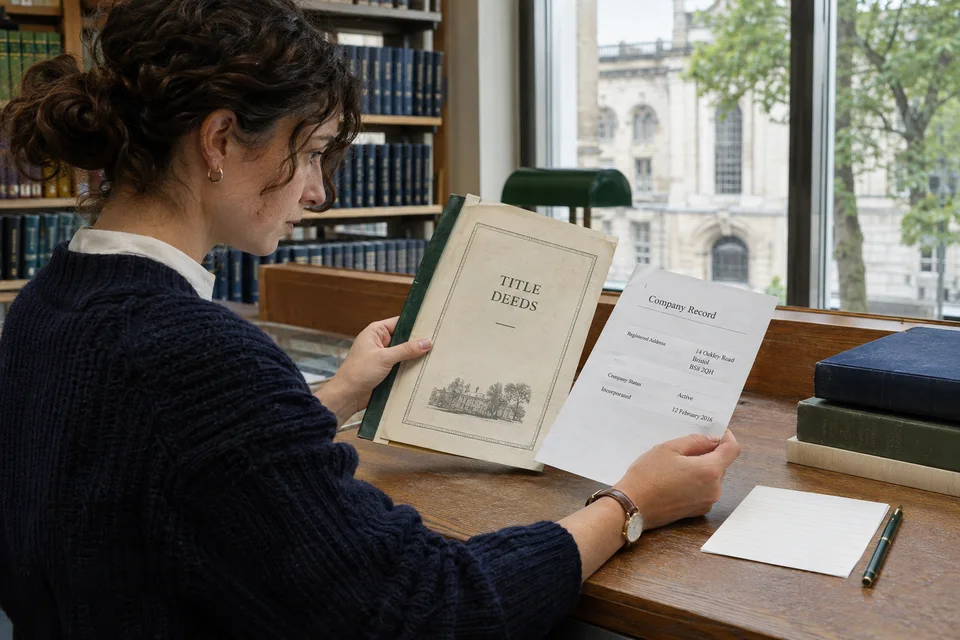
Public Records Can Add Context, Not a Complete Answer
Company appointments, public business information, property information lawfully available, electoral or commercial-source data and public profiles can sometimes connect a person to an address. Each source has limitations and may lag behind real life.
A director's service address, for example, may be an accountant's office rather than a home. Social-media photographs can be old or selectively posted. Strong work reconciles sources instead of treating any single record as definitive.
Cohabitation Evidence in Benefits or Housing Matters
Means-tested benefits can treat people as a couple based on the applicable rules, and housing arrangements can raise separate occupancy or tenancy issues. These are specialist statutory decisions. A private investigator can establish factual observations and public-source connections but should not present themselves as the decision-maker.
Where a public authority has its own investigative powers and test, the client's evidence should be channelled through the correct process.
The Legal Test Comes Before the Surveillance Plan
Before instructing observations, ask what fact the solicitor, court, insurer, landlord or other decision-maker actually needs. “Prove they live together” is often too vague. A narrower question produces more proportionate evidence and a more useful report.
How We Structure a Cohabitation Investigation
1. Define the Purpose
We establish whether the issue concerns maintenance, financial proceedings, housing, benefits, inheritance or another factual dispute.
2. Identify the Indicators That Would Actually Matter
The plan focuses on residence and household patterns relevant to the instruction rather than open-ended monitoring.
3. Gather Lawful Corroboration
Public records and existing client material are checked before deciding whether live observation is necessary.
4. Observe Proportionately
Where justified, evidence is gathered from lawful public positions and recorded with dates, times and limitations.
5. Report the Pattern, Not a Legal Verdict
The report states what was observed and how often, leaving the legal consequence to the client's adviser or decision-maker.
Negative Evidence Can Be Important
If a suspected partner is not present across a properly selected period, or the observed routine is inconsistent with the allegation, that can prevent a client from pursuing an assumption that the evidence does not support.
Current Law Is Also Under Review
In 2026 the Ministry of Justice consulted on reforms to financial remedies on divorce and on stronger protections for cohabitants on separation and death. The consultation highlights the current gap between marriage and cohabitation law. Proposed reform should not be confused with current rights until legislation actually changes the law.
When to Instruct a Cohabitation Investigation
If your solicitor has identified cohabitation as genuinely relevant, early scoping can save unnecessary surveillance. You can book a confidential consultation with the purpose, relevant order or dispute, known address, key dates and any safety concern.
Residence, Relationship and Financial Interdependence Are Not the Same Thing
Two people can spend substantial time together without combining finances, and two people can contribute financially to the same household without being in a romantic relationship. Depending on the legal issue, the decision-maker may care about residence, the nature of the relationship, shared expenses, household organisation or a combination of factors.
A private investigator should therefore avoid trying to infer private financial arrangements from outward appearances. The report should state observable facts and any lawful documentary connection, leaving the legal test to the solicitor or authority.
Time Patterns Are Usually More Informative Than Isolated Sightings
A repeated pattern over carefully chosen dates can show more than one prolonged observation. For example, consistent early-morning departures and evening returns across different parts of the week may carry different evidential weight from a single weekend stay. The correct observation window depends on the question being tested.
Investigators should also record absences. Evidence that a suspected partner is not present during dates when the allegation predicted they would be there can be just as important as positive sightings.
Domestic Activity Should Be Described, Not Romanticised
Reports sometimes become weak because neutral observations are converted into relationship labels. Carrying shopping into a property, collecting post, taking bins out or travelling together may be relevant domestic indicators, but each should be recorded as the action observed. The report should not transform those facts into “they live as husband and wife” unless that is a conclusion properly supported by the full evidence and legal context.
This factual discipline is especially important where evidence may be challenged in family proceedings.
Cohabitation After Divorce Is Different from the Divorce Itself
England and Wales has a no-fault divorce process. Evidence that a spouse or former spouse is living with somebody else is therefore not needed to prove adultery in order to obtain the divorce. If cohabitation matters, it is more likely to be because of a financial order, maintenance, household resources or another specific legal issue identified by the solicitor.
This prevents clients from paying for surveillance that answers a question the court no longer needs for the divorce application.
Evidence Should Be Disclosed Through the Correct Legal Channel
A client may be tempted to confront the other party with photographs or send the report to relatives. That can create unnecessary conflict and may affect negotiations or safety. Where proceedings are active, evidence should normally be discussed with the solicitor before disclosure.
The investigator's role ends with accurate evidence and professional reporting. Decisions about disclosure, cross-examination, settlement or applications belong to the legal team and client.
Safeguarding Can Change What Should Be Reported to the Client
If an investigation identifies a refuge, vulnerable adult, child safeguarding issue or credible domestic-abuse risk, the normal assumption that the client receives every location detail may need to be reconsidered. A professional agency should prioritise safety and use the solicitor or appropriate authority as the disclosure route where necessary.
That does not mean evidence is hidden arbitrarily. It means the method of handling sensitive location information is part of responsible investigation practice.
Household Contributions Can Matter, but Investigators Need Lawful Evidence
In some disputes, the legal team may be interested in whether another adult appears to contribute to a household, share recurring domestic responsibilities or maintain another genuine home elsewhere. Those questions cannot be answered by guessing from lifestyle or appearance. Investigators can document observable patterns and lawful records, but private bank statements, utility accounts or confidential benefit records are not available simply because a client wants them.
If financial information is important to proceedings, the solicitor should identify the proper disclosure route. Surveillance should not be used as a substitute for formal financial disclosure.
Choose Observation Dates for Evidential Reasons
A good plan explains why particular dates were selected: workdays, weekends, school routines, a known travel pattern or a period identified by the legal team. Random surveillance can generate volume without answering the question. Purposeful sampling makes both positive and negative observations easier to interpret.
The report should also avoid implying that days not observed followed the same pattern. Evidence should describe the monitored period honestly.
Practical point: a cohabitation report is most useful when it shows a measured pattern, explains the observation window and records limitations. It should help a solicitor assess the issue, not overstate what surveillance can prove.
That disciplined approach also reduces unnecessary intrusion into unrelated private life.
Frequently Asked Questions About Cohabitation Evidence
Answers about cohabitation, maintenance, surveillance, public records, family-law relevance and the limits of private-investigator evidence.
What Does Cohabitation Mean?
In ordinary use it means living together as a couple, but the precise legal relevance varies by context. There is no single private-investigator definition that automatically applies to maintenance, benefits, housing and inheritance cases.
Does Living Together Create a Common Law Marriage?
No. GOV.UK states that common law marriage does not exist in England and Wales, even where a couple has lived together for a long time or has children.
Does Cohabitation Automatically Stop Spousal Maintenance?
Not automatically. The effect depends on the order and circumstances. A new household can be relevant to a variation application, but legal advice is needed on the particular maintenance order.
What Evidence Can Show Cohabitation?
A pattern of repeated overnight presence, shared routines, address links, public records and other corroborated evidence may be relevant. The value lies in the overall pattern rather than one isolated observation.
Is a Car Parked Overnight Proof of Cohabitation?
No. Vehicle presence is one indicator and does not prove who stayed at the property or why. It should be corroborated with other evidence.
Can a Private Investigator Watch a House?
Lawful public-place surveillance may be possible where it is necessary and proportionate. Investigators should not enter private property, intrude into the home or use unlawful recording methods.
Can an Investigator Check Bank Accounts to Prove Shared Finances?
No. Private investigators do not have a general right to access another person’s private bank records. Financial disclosure in legal proceedings follows the appropriate legal process.
Can Social Media Prove a Couple Lives Together?
Public posts can provide leads or context, but they may be old, staged or incomplete. Social-media material should be authenticated and corroborated.
How Long Does a Cohabitation Investigation Take?
It depends on the pattern being tested and the legal purpose. Evidence gathered over a carefully selected period is often more useful than a single long surveillance day.
Can Cohabitation Evidence Be Used in Court?
Potentially, if relevant and lawfully obtained. The solicitor should decide how the evidence fits the legal test and how it should be introduced in proceedings.
Is Cohabitation Relevant to Benefits?
It can be relevant to means-tested benefits, but the relevant public authority applies its own statutory test. A private investigator can provide factual evidence, not make the entitlement decision.
Can Cohabitation Evidence Be Relevant After Someone Dies?
Potentially. The Inheritance (Provision for Family and Dependants) Act 1975 includes certain cohabitants among people who may be eligible to apply for financial provision, subject to statutory conditions.
Can You Investigate If Children Live at the Address Too?
The presence of children requires additional safeguarding care. Children should not be used to gather evidence or drawn unnecessarily into surveillance or enquiries.
What If the New Partner Only Stays at Weekends?
That is a factual pattern that can be documented, but whether it amounts to legally relevant cohabitation depends on the context and legal test. The investigator should not overstate the conclusion.
What Should I Provide Before Instructing Trojan Investigations?
Provide the reason cohabitation matters, any relevant court order or solicitor advice, full identifiers, known addresses, dates, existing evidence and any domestic-abuse or safeguarding concern.
Not Sure Where to Start?
Tell us what happened and what you need to establish. We’ll discuss the options before you decide.
BOOK A FREE CONSULTATION