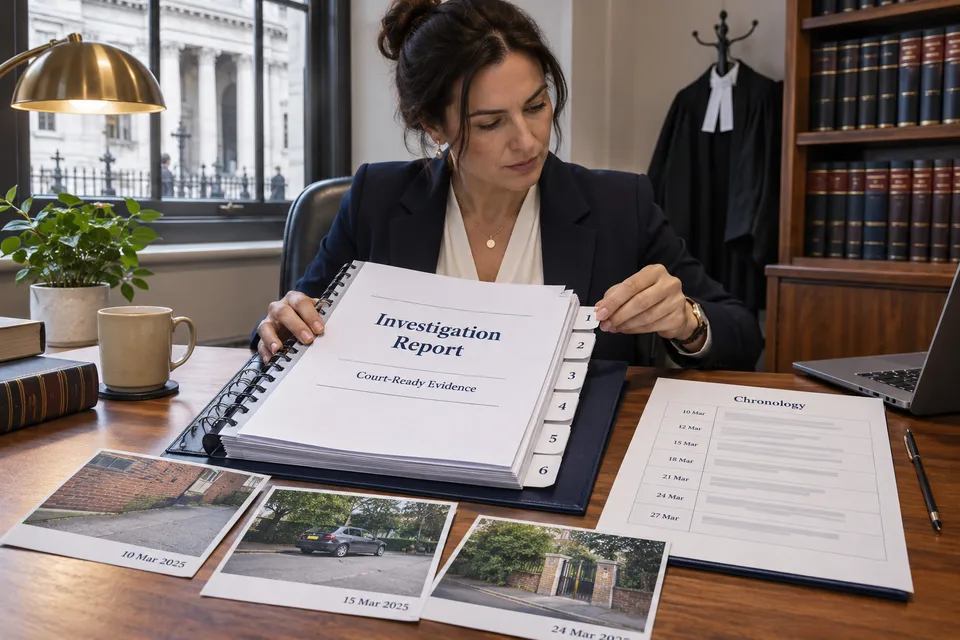

A person does not necessarily defeat a UK court case simply by trying to avoid being served papers. The correct response depends on the type of proceedings and document. In civil cases in England and Wales, the Civil Procedure Rules provide several permitted methods of service and allow the court to authorise an alternative method or place where there is good reason. Family proceedings have their own Part 6 rules. A process server's job is to establish identity, attempt service lawfully and document exactly what happened so the solicitor can decide the next procedural step.
At Trojan Investigations , our role is not to force someone to accept documents or to invent a confrontation. We support solicitors and clients by locating the correct person, making proportionate service attempts where instructed, preserving a detailed attendance record and reporting facts that may support the next application.
What Happens When Someone Appears to Be Avoiding Service?
The practical sequence is usually:
- confirm which rules apply to the document;
- verify the person's current address or other lawful location;
- make properly planned service attempts where personal service is required or chosen;
- record dates, times, observations, identification method and the result of each attendance;
- avoid harassment, trespass or unsafe confrontation;
- report the unsuccessful or successful attempts to the solicitor; and
- allow the solicitor to consider another permitted method, deemed service, bailiff service or an application for alternative service where the rules allow it.
“They would not open the door” is the beginning of a procedural decision, not the end of the case.
First Check Whether Personal Service Is Actually Required
Not every court document has to be handed directly to the recipient. CPR Part 6 permits different methods for claim forms and other documents, including post, leaving a document at a permitted place and certain electronic methods, subject to the detailed rules. Personal service is one available method and is mandatory only where another rule, enactment, practice direction or court order requires it.
That distinction matters. A client may believe a subject is “avoiding service” when the relevant document can lawfully be served another way. The solicitor should identify the rule before operational work begins.
| Issue | What the rules may require | What an investigator can contribute |
|---|---|---|
| Last known address may be stale | CPR 6.9 requires reasonable steps in relevant cases to ascertain a current address | Lawful tracing and address verification |
| Personal service required | Document must be left with the correct individual or other permitted person | Identification, attendance and factual service record |
| Subject repeatedly unavailable | Further attempts or another procedural route may be appropriate | Documented chronology of attempts and observations |
| Alternative method may be needed | CPR 6.15 or 6.27 can allow court-authorised alternative service where there is good reason | Evidence supporting the solicitor's application |
| Family proceedings | FPR Part 6 contains separate rules and safeguards | Service only in accordance with the family-law instruction |
| Company defendant | Different service provisions can apply to companies | Verification of company status and relevant premises where instructed |

Avoidance and Non-Availability Are Not the Same Thing
A subject may be at work, on holiday, caring for someone, working shifts or simply not present. An investigator should report what was actually observed rather than labelling every failed attendance as deliberate evasion. Repeated evidence can support an inference, but the report should distinguish fact from interpretation.
This is particularly important if the attendance record is later exhibited to a witness statement supporting a court application.
Tracing May Be Needed Before Further Service Attempts
CPR 6.9 is important where a claimant has reason to believe an individual's usual or last known address is no longer current. In those circumstances the claimant must take reasonable steps to ascertain a current address. Our legal and litigation support can combine lawful tracing with a clear report explaining which identifiers support the result.
Address tracing should not rely on one stale database entry. Former names, dates of birth where lawfully available, company links, electoral or commercial sources, open information and field verification may need to be reconciled.
What a Useful Process-Serving Attendance Note Should Record
- the exact document or service instruction received;
- the name and identifying information for the person to be served;
- the address or location attended;
- date and time of each attendance;
- how the subject was identified where personal service occurred;
- what was seen and heard without exaggeration;
- whether anyone else provided relevant information;
- whether the document was served and by what permitted method;
- any safety, access or safeguarding issue; and
- the next factual lead, if one arose.
What Is Alternative Service?
Under CPR 6.15, where there is good reason, the court may authorise service of a claim form by a method or at a place not otherwise permitted. The court can also, in appropriate circumstances, treat steps already taken to bring the claim form to the defendant's attention as good service. Similar principles apply to other documents through CPR 6.27.
A private investigator does not grant alternative service. The court does. The investigator's value is in supplying accurate evidence of the attempts, address enquiries and circumstances so the solicitor can decide whether an application is justified.
A Process Server Has No Power to Detain, Threaten or Enter by Force
Private process serving is not law enforcement. A process server should not trespass into private areas, impersonate a police officer, force entry or create a breach of the peace simply to hand over paperwork. The method must remain lawful and proportionate.
Can Papers Be Left If the Person Refuses to Take Them?
The answer depends on the applicable rule and facts. Personal service under CPR 6.5 is defined by leaving the claim form with the individual. Case-specific legal advice is important where the recipient refuses to physically hold the documents or moves away during an attendance, because the service record may later need to demonstrate what actually occurred.
The investigator should not improvise a legal conclusion at the doorstep. Record the event precisely and let the instructed solicitor assess service.

What About Family Proceedings?
Family Procedure Rules Part 6 has its own service framework. For matrimonial and civil-partnership applications, personal service cannot be carried out by the applicant personally, and there are specific provisions for court service, bailiff service, email service and alternative service. There are also additional safeguards in sensitive cases, including provisions concerning people believed to be residing in refuges.
Our personal investigation services may support locating or factual enquiries in private family matters, but the service method should always follow the family-law instruction rather than assuming the civil CPR route applies.
What If the Defendant Is a Company or Director?
A company can be served under CPR Part 6 and, in appropriate circumstances, under Companies Act provisions. Serving a company is not the same as personally serving one of its directors. The solicitor should specify the defendant and the permitted address or method.
Where a business address, trading status or director link needs verification first, our business investigation services can support the factual research without replacing the solicitor's procedural decision.
Do Not Turn Service into Repeated Pressure
Multiple attendances may be justified, but the purpose is to complete a legal task, not to intimidate the recipient. Repeated contact must remain proportionate and should stop or change approach when the legal team decides another service route is more appropriate.
How We Handle a Difficult Service Instruction
1. Confirm the Document and Rule
We need to know what is being served, the court or proceedings, the deadline and whether personal service is required.
2. Verify the Subject and Location
We check the identifiers and whether the proposed address is reasonably current before repeated deployment.
3. Plan Proportionate Attendances
Attendances are structured around the instruction and known routine without creating unnecessary intrusion or confrontation.
4. Record Each Outcome
Notes distinguish direct observation, third-party information and inference so the legal team has a reliable chronology.
5. Escalate Procedurally, Not Emotionally
If service remains unsuccessful, the report goes back to the solicitor to consider the next lawful route.
Good Documentation Can Be as Important as the Final Handover
When someone genuinely cannot be served, a clear record of reasonable steps can help the solicitor explain to the court what has been attempted and why another method may now be necessary.
When to Instruct a Process Server
Early instruction gives time to verify the address, plan attendances and preserve options before a deadline becomes urgent. If you have a service problem, you can book a confidential consultation with the document type, court reference if applicable, service deadline, subject identifiers and last known address.
Deemed Service Can Matter Even When Nobody Signs for the Papers
The Civil Procedure Rules contain deemed-service provisions for certain permitted methods. In practical terms, legal service is not always dependent on the recipient signing a delivery slip or verbally admitting that they received the document. The applicable rule, the method used and the address used determine the procedural effect.
This is another reason why a process server should not promise that a doorstep encounter is always necessary. The solicitor should decide whether the document has already been served under the rules, whether personal service is still required, or whether further attempts would simply duplicate work.
Evidence for Alternative Service Should Be Specific
If the solicitor is considering an application under CPR 6.15 or 6.27, a vague statement that “the defendant is avoiding us” is much weaker than a documented chronology. Useful evidence may include address checks, dates and times of attendance, information showing the address is current, observations indicating the subject's connection to the location and the reason ordinary service has not succeeded.
The court decides whether there is a good reason for alternative service and what method or place is permitted. The investigator's role is to provide reliable facts that allow the application to be made accurately.
Electronic Service Has Its Own Rules
Email, messaging platforms and other electronic methods can be attractive when a subject appears active online, but that does not mean a process server should simply send court papers to any address or account they can find. Practice Direction 6A and the relevant procedural rule govern when electronic service is permitted, and alternative electronic service may require a court order.
If an online account is relevant, preserve why it is believed to belong to the defendant and when it was active. That evidence can assist the solicitor without the investigator making the procedural decision themselves.
Identification Must Be Reliable
Personal service can become disputed if the process server cannot explain how they knew they had the correct person. Before attendance, useful identifiers can include a photograph lawfully supplied by the client, date of birth, vehicle, employer, known address or other distinguishing information. During the attendance, the server should record the identification basis factually.
Common names create particular risk. Serving the wrong person is not cured by having attended the correct street, so identity checks should be part of the instruction rather than left until the moment of service.
Service Out of the Jurisdiction Needs Separate Planning
If the person has moved abroad, the domestic process-serving plan should stop and the solicitor should consider the rules for service outside the jurisdiction. International service can involve permission, treaty arrangements, foreign procedural requirements and longer response periods.
A UK private investigator may assist with overseas tracing or coordination through lawful local providers, but should not assume that a method valid in England and Wales can simply be repeated in another country.
Safety Can Override a Routine Attendance Plan
Process servers sometimes receive information about threats, weapons, domestic abuse, volatile behaviour or safeguarding concerns. Those details should be disclosed at instruction. No service attempt is worth creating an avoidable risk to the server, family members, neighbours or the recipient.
A professional agency can adjust timing, location, staffing or reporting and refer back to the solicitor where a different method is safer. The objective is lawful service, not confrontation.
Deadlines Should Drive the Instruction
Service problems become much harder when a deadline is already close. The solicitor should tell the process server the issue date, service deadline and any hearing date at the outset so there is time to verify the address, make sensible attempts and, if necessary, prepare evidence for a different procedural route. Repeated late attendances should not replace proper planning.
Practical point: a failed attendance should always leave the legal team with something useful: a confirmed address, a reason the address is doubtful, a better lead, or a documented basis for changing the service strategy.
Accurate timing and clear notes matter throughout.
Frequently Asked Questions About Avoiding Service of Court Papers
Answers about personal service, alternative service, tracing, CPR and FPR rules, failed attendances and process-server evidence.
Can Someone Stop a Court Case by Refusing to Answer the Door?
Not automatically. The effect depends on the document and service rules. The solicitor may be able to rely on another permitted method or apply to the court for alternative service where the rules allow it.
Does Every Claim Form Have to Be Personally Served?
No. CPR Part 6 permits several service methods. Personal service is required only where a rule, enactment, practice direction or court order requires it, or where it is otherwise chosen and permitted.
What Is Alternative Service?
It is a court-authorised method or place of service outside the ordinary route. Under CPR 6.15, the court may permit it where there is a good reason, supported by evidence.
Can a Private Process Server Apply for Alternative Service?
The legal application is normally made by the party or their solicitor. The process server can provide the factual evidence of attempts, tracing and observations that supports the application.
What If the Defendant Has Moved from the Last Known Address?
For individuals in relevant civil claims, CPR 6.9 requires reasonable steps to ascertain a current address where there is reason to believe the last known address is no longer current.
Can a Process Server Force Someone to Take the Papers?
No. A private process server has no power to detain someone, force entry or use unlawful pressure. The service method must remain within the applicable rules and general law.
Can Papers Be Served at Work?
Sometimes, depending on the document, rule, circumstances and solicitor’s instruction. The correct service address or personal-service requirement should be confirmed before attendance.
Can Court Papers Be Served by Email?
In some proceedings and circumstances, yes, but the detailed rules and consent or court-order requirements vary. The solicitor should confirm whether email service is valid for the specific document.
What If the Person Is Abroad?
Service outside the jurisdiction has separate rules and can involve permission, international conventions or country-specific requirements. It should be planned through the solicitor.
Are Family Court Papers Served Under the Same Rules as Civil Claims?
No. Family Procedure Rules Part 6 contains a separate framework, including specific rules for matrimonial applications, personal service, email, bailiff service and alternative service.
Can the Applicant Personally Serve Divorce Papers?
For matrimonial and civil-partnership applications under FPR Part 6, the applicant must not personally serve the application. Another permitted person or method must be used.
How Many Attempts Should a Process Server Make?
There is no universal number that proves reasonableness in every case. Attempts should be proportionate to the instruction, deadline, known circumstances and the procedural purpose.
What Evidence Does the Process Server Provide?
A professional report records the address, date, time, identification, method, observations and outcome. Where required, a certificate or witness evidence may then be prepared in the appropriate form.
What If the Person Is in a Refuge or There Are Safeguarding Concerns?
Sensitive cases require additional care. Family rules contain specific protection for refuge information, and disclosure or attendance should be handled through the solicitor and relevant court procedure.
What Should I Provide Before Instructing Service?
Provide the documents, service deadline, full subject identifiers, last known address, photograph if lawfully held, solicitor details and any known safety or safeguarding information.
Not Sure Where to Start?
Tell us what happened and what you need to establish. We’ll discuss the options before you decide.
BOOK A FREE CONSULTATION