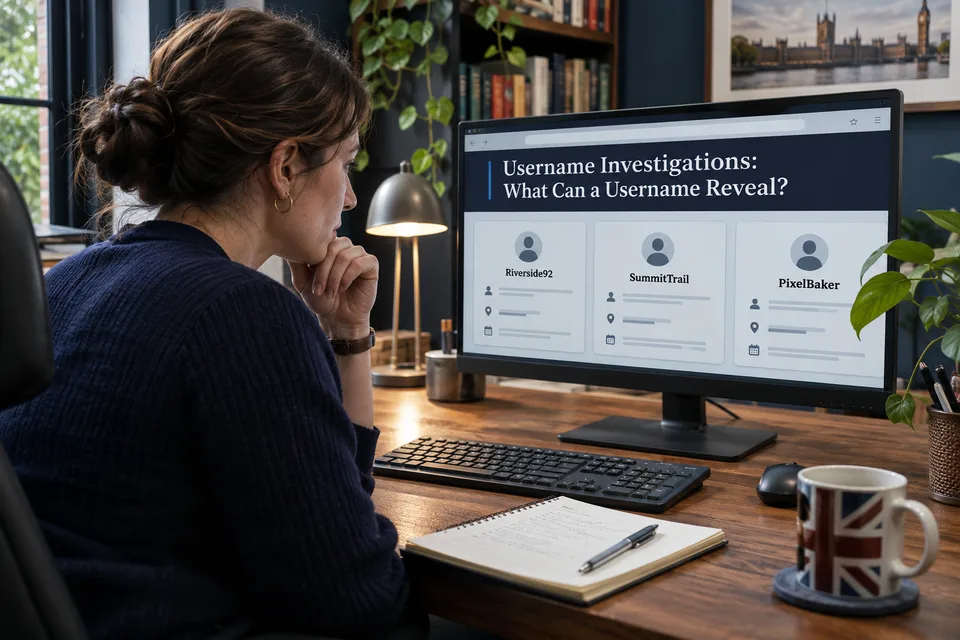
A username can reveal a possible connection between public online profiles, posts, businesses and past activity, but it does not reliably identify the person behind an account on its own. The same handle may be used by unrelated people, copied by an impersonator, changed over time or attached to an abandoned account. Professional username investigations assess the source, date and context of each connection, then look for independent corroboration instead of treating a search result as proof.
At Trojan Investigations , we approach an online identifier as one piece of potential evidence in a legitimate enquiry, such as suspected impersonation, online fraud or a business dispute. A client’s concern does not give an investigator permission to breach account security, collect unrelated private details or expose someone to unwanted contact. The useful outcome is a properly qualified answer to a specific question.
What Information Might a Username Reveal?
A handle may connect to publicly visible material, although the strength of any attribution varies considerably. Depending on the circumstances and platform, an enquiry might identify:
- Publicly declared profile names, biographies, websites or professional roles.
- Posts, profile changes and comments that remain legitimately visible.
- A public business or project account that displays the same identifier.
- Links posted by an account itself to other sites or a portfolio.
- Approximate dates when the account or material was observed.
- Potential impersonation, account cloning or inconsistent claimed identities.
- Relevant differences between historical and current public-facing information.
Start by Defining the Actual Investigative Question
A username investigation should answer something precise: Is a profile impersonating your business? Does a public account genuinely appear associated with a contractor? Are several suspicious public listings connected, or do they merely use the same wording? Was a particular statement published at a relevant time? These are materially different questions requiring different types of evidence.
Open-ended attempts to discover everything about a private person’s online life are not a sound investigative objective. We check the client’s authority and need for the information, consider proportionality, and decide whether a less intrusive approach would answer the question. That screening is particularly important where an ex-partner, estranged relative or person who has avoided contact is involved.

A Username Is an Account Label, Not a Permanent Identity
Some accounts use names chosen by the user, while others use handles assigned automatically or changed after registration. Old usernames may later be adopted by somebody else. Shared family accounts, team-managed business profiles, parody accounts and hacked accounts can create apparently contradictory histories without one person being responsible for everything shown.
Two profiles displaying identical handles may have no relationship; conversely, one person may legitimately use different handles for professional, creative and private activity. A sound investigation does not assume that either pattern is evidence of deception. It documents why an apparent connection is plausible and what is still unknown.
| Public clue | What it may indicate | What it cannot prove alone |
|---|---|---|
| Matching handles on two sites | A possible cross-platform association | That the same person controls both accounts |
| A self-written biography | A claimed occupation, place or identity | That the claim has been verified independently |
| A linked business website | An association asserted by the profile or website | Who operates the individual account today |
| A photograph or avatar | That particular visual material appears on an account | That the pictured person owns the account |
| An old forum post | Content visible at an identifiable source and time | A current address, employer or ongoing affiliation |
| A public comment referring to an event | A possible chronology or factual lead | That the author attended or witnessed the event |
| Copied text across profiles | A shared or reused source of words | That every account is coordinated by one operator |
What Can Lawful Public-Source Research Establish?
Public-source research can document what a profile made visible and whether it made an explicit connection to another account, website or organisation. For example, a verified corporate website may list a public professional account, or a project page may quote a profile’s published work. Where the relationship matters, we still assess who controls the source and when the information was published.
A visible page is not necessarily accurate. Organisations may leave staff biographies online after somebody leaves, while community accounts may publish unverified submissions. Personal information also remains subject to UK data-protection obligations when it is publicly available; an investigator needs an appropriate purpose, lawful basis, necessity and data minimisation. Our personal investigation services use those distinctions when considering a digital identity enquiry.
How Investigators Avoid False Matches
Name collisions are common online. A username such as a first name followed by a popular number can occur independently on multiple services. Even unusual labels may be copied because a brand, game, meme or creator made them popular. Search results can compound the problem by mixing cached pages, reposts and sites that automatically mirror account information.
The right test is independent agreement between reliable details. Does the person or organisation voluntarily link the accounts? Are publication dates compatible? Is the same original work attributed by a source with genuine authority? Are there inconsistencies that suggest two separate people? A confidence assessment should state the reasons for a conclusion and preserve plausible alternative explanations.
Old Usernames, Archives and Changed Profiles
A historical public page may help establish that a particular claim appeared at a particular time. That does not prove the information remains true now. Archiving may be incomplete, and the recorded date may indicate when a service captured a page rather than when a user wrote the content. Deleted material may not be recoverable and should not be treated as though an investigator has privileged platform access.
When an old account could belong to a different user, any attribution should be narrowed to the evidence period. The report may say that a username was publicly associated with an organisation in a dated capture, while expressly declining to identify the present user without further evidence. That precision is more useful than a sweeping, potentially wrong claim.
Impersonation, Cloned Profiles and Stolen Images
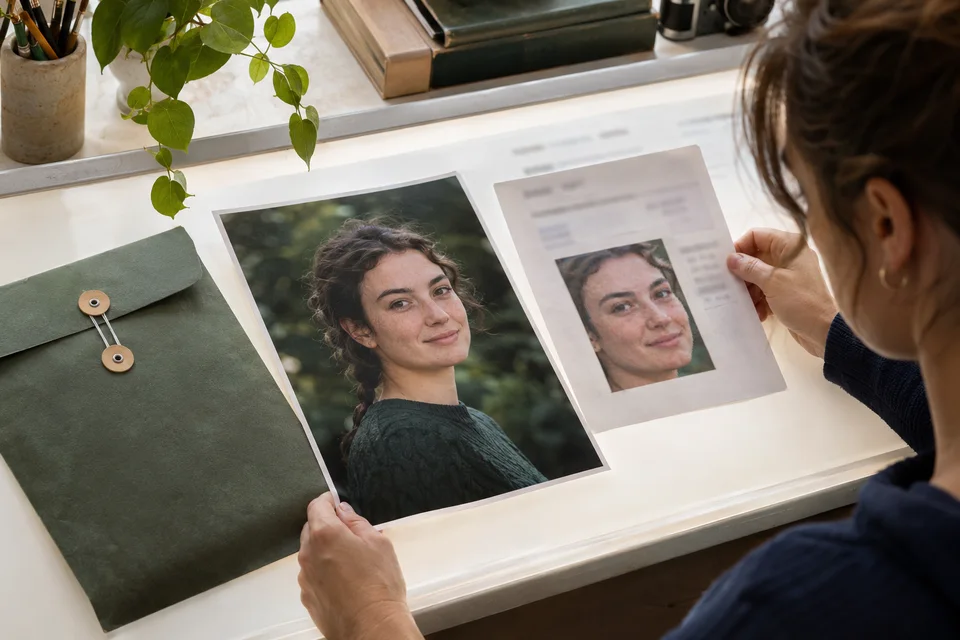
An impersonator may copy a genuine person’s handle, biography, profile picture or brand identity. A copied account can therefore look convincingly connected to an innocent person. The same issue arises when stolen photographs or AI-generated images appear beside a false biography. A visual similarity is a reason to verify carefully, not grounds to identify or accuse the person shown.
In business matters, preserving public evidence of brand misuse and distinguishing the legitimate channel from the suspicious channel may help a platform complaint, a fraud investigation or a solicitor-led claim. Our business investigation work concentrates on source, demonstrable harm and who is actually entitled to control the relevant assets, rather than assuming every imitation account is run by a named competitor.
Do Not Turn a Username Enquiry into Unwanted Contact
Attempting to identify and approach an anonymous private person for revenge, relationship control or repeated unwanted contact can create serious safety and harassment concerns. Do not recruit strangers to message an account, publish personal details, impersonate another user or try to lure the account holder into revealing a private address.
What a Private Investigator Cannot Obtain Just by Searching a Handle
A private investigator cannot compel a platform to provide protected email addresses, IP logs, device identifiers, login history or subscriber information. Nor may we guess passwords, bypass privacy controls, use spyware or treat a compromised database as a legitimate source simply because it is advertised online. The Computer Misuse Act 1990 and data-protection rules impose real boundaries.
An IP address, even where legitimately recorded in a separate context, is not automatically a named person’s identity or home. If a criminal offence is suspected, police or an appropriate authority may have lawful procedures unavailable to a commercial investigator. A private report cannot manufacture that authority.
Public Visibility Is Not Unlimited Permission
The ICO explains that online identifiers can be personal data when they relate to an identifiable individual. Legitimate interests, where available, require a purpose, necessity and balancing assessment. Repetition, monitoring and the compilation of private-life profiles can also present harassment or safeguarding risks, even where individual items were visible online.
Preserving Useful Evidence Without Changing It
Username-Evidence Preservation Checklist
- Record the exact handle, including punctuation, capitalisation and the platform name.
- Keep the full profile URL and the date and time it was observed, with the time zone.
- Capture the full relevant page context rather than only a cropped accusation.
- Preserve original messages and attachments only if you received or hold them lawfully.
- Make a clear note of what was publicly visible and what was a third-party claim.
- Keep platform reporting acknowledgements and any business or police reference.
- Record whether a source was an original account, archive, news report or repost.
- Preserve contradictory information and innocent explanations as well as apparent matches.
- Avoid contacting associates or republishing private details to test a theory.
Can Username Evidence Support a Civil or Commercial Case?
Potentially. A dated public statement, a demonstrably impersonating business profile or relevant published representation can be part of a wider evidential picture. Its value depends on reliable capture, correct attribution, completeness and the underlying legal issue. The solicitor may need originals, a witness able to explain collection and a clear record of what the investigator personally observed.
Our legal and litigation support can be work coveredd to that question. We distinguish direct observations from a client’s assertions and explain why an account may be connected to a person or business. A search-result screenshot with no source or collection date is comparatively weak.
How We Approach a Proportionate Username Enquiry
1. Check Purpose and Safety
Confirm the factual objective, the client’s legitimate role and any harassment, impersonation or vulnerable-person concerns.
2. Preserve Known Material
Document publicly visible pages and client-held evidence with original links, timestamps and context.
3. Examine Independent Connections
Compare appropriate, lawful sources and look for both corroboration and reasons the connection may be false.
4. Classify Confidence and Limitations
Separate direct public observations, reported claims, historical associations and unverified leads.
5. Report Only What Is Necessary
Provide a usable chronology or findings report without exposing irrelevant personal details or promising identification.
When Should a Client Report Rather Than Investigate?
If the account is sending threats, harassing somebody or targeting a vulnerable person, safety and police advice should take priority over private research. The Crown Prosecution Service recognises that repeated unwanted online monitoring, impersonation and publication of material can form part of stalking or harassment. A person should not prolong contact or gather more personal data merely to fill an investigative report.
When a username is connected to suspected fraud, preserve evidence promptly and report to the relevant platform and reporting authority. If money has been transferred, the bank should be contacted immediately. An investigator may help structure evidence already obtained, but cannot promise to recover money, obtain platform records or remove every cloned account.
What Is the Difference Between a Lead and a Finding?
A lead invites further checking. A finding identifies the evidence, the date, the method and the conclusion that reasonably follows. A matching username is usually a lead. A verified public statement on an organisation-controlled website linking an account to an authorised public role may provide stronger evidence of that association, but still may not establish every person who has used the account.
That distinction should be visible in the wording of any final report. We avoid labels such as "confirmed identity" when the underlying material only shows a possible match. Even a negative result can be useful: it may prevent somebody being wrongly accused because of a copied account or name collision.
What Should You Do If a Username Is Being Used to Impersonate You?
If somebody has copied your professional account or published false material under a matching handle, start by documenting both the genuine profile and the imitation. Record the URLs, dates, content displayed and any messages sent to customers or colleagues. Use the platform’s formal impersonation-reporting route and secure accounts you actually control. If payments or business instructions were issued from the copy, warn affected parties through independently verified business contact details rather than directing them to the suspicious page.
An investigator may help preserve the public evidence and show which representations differ from the authentic business account. That does not mean we can take control of the impersonating account, identify its operator from protected platform records or guarantee removal. If legal action is contemplated, the solicitor can advise whether the records support a specific claim, preservation request or other permitted step. Timing matters because a fraudulent page may change rapidly after a platform report.
Why Evidence Dates Matter More Than Follower Counts
A popular account may still be a recent impostor; a quiet account may be the genuine long-standing one. Follower counts, badges and the appearance of mutual acquaintances are weak indicators unless their source is established. It is more useful to record when the disputed statement was visible, whether the account made a material representation and which independent source can confirm or dispute it. That approach keeps the enquiry about facts rather than popularity or suspicion.
When Is a Professional Username Investigation Worthwhile?
It is worth considering when a documented business, fraud or legal question cannot reasonably be answered using information already available to the client. A narrow, lawful enquiry is usually preferable to exhaustive monitoring, and some requests should not proceed at all where identity disclosure could endanger somebody or support harassment.
For a confidential assessment of the actual evidence and purpose, book a consultation with Trojan Investigations . We can explain what public information may be tested, what cannot be accessed and whether a useful result is realistic before work begins.
A Reliable Answer May Be That the Identity Cannot Be Verified
Good investigative work reports uncertainty instead of filling gaps. Demonstrating that two accounts cannot safely be linked can protect an innocent person and prevent an expensive or damaging decision.
Frequently Asked Questions About Username Investigations
Straight answers on username tracing, identity matching, impersonation, lawful digital research and evidence preservation.
Can a Username Reveal Someone’s Real Name?
Sometimes a public account is explicitly and independently associated with a person, but the username alone does not establish a legal identity. Profiles can be copied, shared, outdated or false, and a lawful enquiry may remain inconclusive.
Does the Same Username on Two Websites Mean It Is the Same Person?
No. Matching handles are a lead, not confirmation. Reuse, popular labels, shared accounts and impersonation can create false matches; independent corroboration and dates are essential.
Can a Private Investigator Find Every Account Linked to a Username?
No. There is no complete lawful directory of every account. Some profiles are private, unindexed, renamed or deleted, and investigators cannot override access controls to discover hidden accounts.
Can You See Private Social-Media Profiles Using Only a Username?
No. A username does not entitle a private investigator to bypass account settings, impersonate an authorised user or hack a profile. Enquiries must use lawfully accessible material.
Can a Username Prove Who Sent a Threatening Message?
It may help preserve the communication and identify a possible account connection, but attribution can require protected platform information or other evidence. Report threats or stalking to police; do not delay for a private trace.
What If the Username Belongs to a Business?
Public corporate pages, legitimate contact information and recorded representations may show a claimed business association. The investigator should still check account control and whether the claim is current.
Can a Username Reveal an IP Address?
Not merely through a normal public search. IP logs and subscriber information are typically controlled by providers or systems with legitimate access and cannot be demanded by private investigators.
Can Investigators Recover a Deleted Account?
They cannot guarantee that. A lawfully captured historic public page may remain available, but it can be incomplete or outdated. Investigators cannot force a platform to restore deleted data.
How Reliable Are Username Search Websites?
They can produce useful leads but also outdated results, automated copies and false matches. A professional report identifies original sources and does not treat an aggregator result as verified identity.
Can a Profile Picture Verify the Account Owner?
No. Photographs can be copied, manipulated or generated using AI. The person pictured may be an innocent third party, so other evidence is needed.
Do Public Usernames Count as Personal Data?
They can. The ICO recognises online identifiers as possible personal data when they relate to an identifiable individual. Public visibility does not remove UK data-protection obligations.
Can a Username Investigation Be Used in Court?
Relevant, reliable material may assist, but the court controls the evidence and its weight. Preserve source pages, timestamps and collection methods, and ask a solicitor about the appropriate format.
What If Someone Has Copied My Username to Impersonate Me?
Keep evidence of the genuine account and the copy, record relevant URLs and dates, and report impersonation to the platform. Serious fraud or threats may also warrant police involvement.
Will the Person Be Told They Are Being Investigated?
That depends on the lawful purpose, method and applicable data-protection obligations. Discretion does not mean a guarantee of complete secrecy or permission for intrusive monitoring.
What Should I Provide at the First Consultation?
Supply the exact username, platform URLs, relevant screenshots or original messages, dates, the concern, your legitimate connection to it and the decision you need the investigation to support.
Not Sure Where to Start?
Tell us what happened and what you need to establish. We’ll discuss the options before you decide.
BOOK A FREE CONSULTATION