
Suspected misuse of a company vehicle should be investigated by defining the alleged breach, preserving existing fleet and business records, checking what monitoring employees were told about, comparing the vehicle data with work duties, and gathering further evidence only where it is necessary and proportionate. A GPS point, dashcam clip or fuel transaction may be relevant, but it should not be treated as misconduct in isolation.
At Trojan Investigations , we support employers with evidence-led investigations into unauthorised journeys, fuel misuse, private use contrary to policy, suspicious mileage, false job records, vehicle use during sickness absence, asset diversion and related misconduct. The employer remains responsible for the employment and data-protection decisions around monitoring.
How Should a Business Investigate Suspected Company Vehicle Misuse?
A proportionate investigation usually follows this order:
- identify the exact policy or instruction said to have been breached;
- preserve existing telematics, booking, fuel, mileage, job-sheet and access records;
- check whether private use is permitted and when monitoring is active;
- compare records with the employee's role, shifts and authorised journeys;
- look for innocent explanations as well as evidence supporting the allegation;
- use further monitoring or surveillance only where justified and lawfully planned;
- give the employee a fair opportunity to respond through the employer's process; and
- record findings accurately enough to support a defensible HR decision.
The objective is to establish facts, not to convert every unusual journey into a disciplinary allegation.
Start with the Vehicle Policy
The same journey can mean different things under different policies. One employer may permit reasonable private use of a company car; another may provide a van solely for work. Some businesses allow commuting but prohibit carrying unauthorised passengers, overseas travel or towing. The investigation should therefore begin with the contract, handbook, fleet policy and any signed driver rules.
Our business investigation services can help test the factual allegations, but the business should define what conduct would actually amount to misuse before collecting more data.
| Allegation | Potential evidence | Key caution |
|---|---|---|
| Unauthorised private journeys | Policy, telematics, booking records, job records and employee explanation | Private use may be permitted or monitoring outside work may be unjustified |
| Fuel-card misuse | Fuel receipts, timestamps, vehicle capacity, mileage and card allocation | A mismatch is a lead, not automatic proof of theft |
| False mileage claim | Expense claim, route, diary, job sheet and vehicle data | Route variations and incomplete records need to be considered |
| Vehicle used during sickness absence | Policy, authorised-use status, vehicle data and sickness context | Driving is not proof that the employee was fit for contracted work |
| Unauthorised driver | Key logs, CCTV, telematics, insurance records and witness evidence | Identity must be established rather than inferred from vehicle location |
| Asset or stock diversion | Route, delivery records, inventory, receipts and lawful surveillance | Focus on the transaction and goods, not just movement |

Vehicle Tracking Data Is Personal Data When It Relates to a Driver
The ICO states that employers can monitor work vehicles, but they must comply with data-protection law. If private use of the vehicle is allowed, monitoring during private use will rarely be easy to justify. Workers and passengers should be informed about vehicle monitoring, and the employer should have a clearly defined purpose and lawful basis.
The ICO also treats more intrusive driver monitoring, including behaviour analytics, inward-facing cameras and audio, as higher risk. A Data Protection Impact Assessment may be required, and less intrusive alternatives should be considered.
Existing Telematics Do Not Create Unlimited Surveillance Rights
An employer should not repurpose vehicle data simply because the system can collect it. The purpose, lawful basis, transparency, minimisation, retention and private-use settings all matter. Where a private investigator is used, the employer should ensure the instruction and contract require compliant processing.
What Evidence Should Be Preserved First?
Preserve the Records That Already Exist Before Adding New Monitoring
- vehicle allocation and booking records;
- GPS or telematics data already lawfully collected;
- fuel-card and charging records;
- mileage claims and expense submissions;
- job sheets, route plans and delivery records;
- key or access logs;
- dashcam or CCTV footage subject to retention limits;
- maintenance and odometer records;
- relevant emails or work messages lawfully available to the employer; and
- the vehicle, fleet and expenses policies in force at the relevant time.
Compare Data Before You Deploy Surveillance
A strong investigation often starts at a desk. If fuel-card transactions, vehicle mileage, authorised jobs and telematics all point to the same unexplained pattern, the employer can identify the exact question that still needs answering. That makes any later surveillance narrower and easier to justify.
Where observation is necessary, our surveillance services can be work coveredd around a defined allegation and timeframe. Covert monitoring of workers is an exceptional step; ICO guidance says it should be authorised at senior level, supported by a DPIA and targeted for the shortest time needed where informing the worker would prejudice detection of suspected criminal activity or equivalent gross misconduct.
Dashcams and In-Cab Monitoring Need Extra Care
Vehicle cameras can capture workers, passengers, customers and members of the public. The ICO advises that audio creates a higher privacy risk and should not simply be left recording continuously. An inward-facing camera also raises different privacy issues from an outward-facing safety camera.
Investigators should work with the evidence lawfully available rather than encouraging a business to turn on more intrusive functions retrospectively without a compliance assessment.
Fuel Misuse Requires More Than a Suspicious Receipt
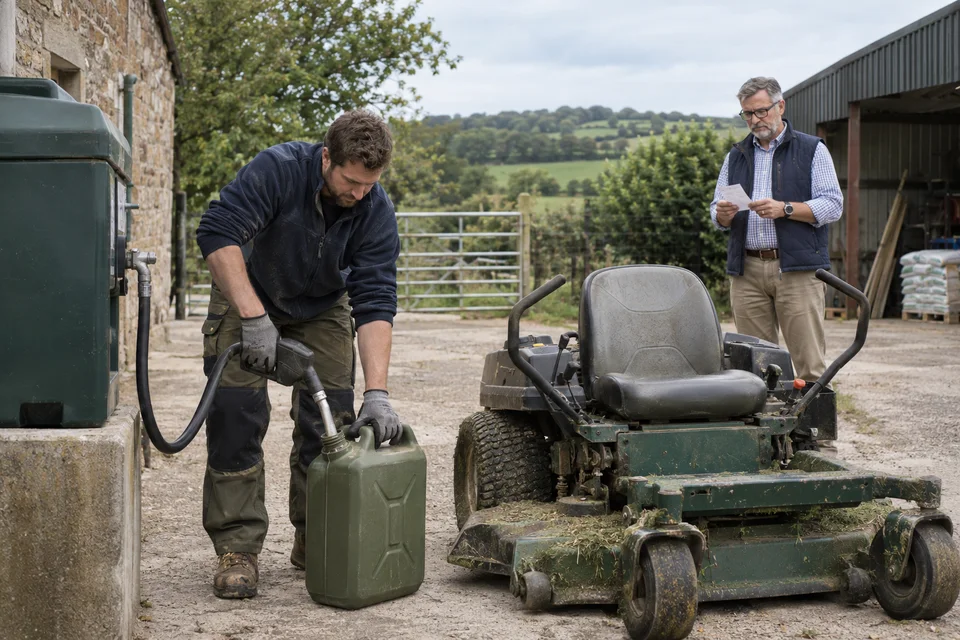
A fuel transaction can look inconsistent because the vehicle changed, a receipt was processed later, a replacement vehicle was used or a legitimate container was filled for authorised equipment. Equally, repeated fuel volumes that exceed plausible vehicle use, transactions during non-working periods or purchases far from any authorised route can justify closer examination.
The evidence should be reconciled with mileage, route, vehicle capacity, policy and employee explanation before a conclusion is reached.
Misuse During Sickness Absence
Seeing a company vehicle move while an employee is off sick can be relevant, but it does not prove fraudulent sickness absence. An employee may be able to drive while still medically unfit for their specific job. The employer should separate the vehicle-policy issue from the health and absence issue and avoid assumptions about medical capability.
If the vehicle was expressly prohibited from private use during absence, that is a separate factual question that can be investigated on its own terms.
Do Not Treat Location Data as Identity Data
A vehicle being at a location does not prove who drove it, who was present or why it was there. Where identity matters, investigators should look for corroborating evidence instead of attributing every movement automatically to the employee assigned to the vehicle.
Fair Workplace Investigation Still Matters
Acas guidance says an employer investigating possible misconduct should gather evidence from all sides, establish whether there is a case to answer and follow a fair procedure. Investigators should consider evidence that supports and contradicts the allegation and assess reliability rather than building only a prosecution-style case.
If the evidence may later support litigation or a serious disciplinary decision, our legal and litigation support can help structure the evidential record, but the employer should take appropriate HR or legal advice on the employment outcome.
How We Structure a Company Vehicle Investigation
1. Define the Suspected Misuse
We identify the policy, date range, vehicle, driver allocation and business impact rather than accepting a broad allegation.
2. Preserve and Reconcile Records
Fleet, expense, job and access records are compared before more intrusive work is considered.
3. Identify the Evidential Gap
We determine what remains unproven: who drove, where goods went, whether a journey was authorised or whether records were falsified.
4. Use Proportionate Further Enquiries
Surveillance, interviews, public-source checks or additional record analysis are used only where they answer the remaining question.
5. Report Factually
The report separates observation, system data, employee explanation and inference so the employer can make its own fair decision.
A Good Investigation Can Clear an Employee as Well as Implicate One
Independent evidence may show that a journey was authorised, the vehicle was used by someone else or the apparent discrepancy came from poor records. That is a successful investigation because the purpose is to establish the truth.
When to Instruct an Investigator
External investigation can be useful where losses are material, managers are conflicted, covert observation may be considered, several records disagree or the business needs an independent evidential chronology. You can book a confidential consultation with the vehicle details, policy, allegation, date range and records already available.
Check the Accuracy of Telematics Before Relying on It
Vehicle systems can contain time-zone errors, GPS drift, delayed uploads, duplicated trips, missing data or incorrect driver assignments. If an employer may take disciplinary action, the investigator should understand how the system records a journey and whether the specific data point is reliable enough to support the allegation.
Where possible, compare telematics with independent records such as job timestamps, fuel purchases, key logs, delivery scans or odometer readings. A pattern supported across systems is stronger than one isolated dashboard entry.
Private-Use Settings Should Be Part of the Evidence Review
If workers are allowed private use, ask whether the tracking system has a privacy mode, how it is activated and what employees were told. A journey recorded outside working hours may say more about the configuration of the monitoring system than about employee misconduct.
The ICO's vehicle-monitoring guidance specifically recognises the value of systems that allow tracking to be disabled during private use. An investigation should therefore review system design and policy together before drawing conclusions.
Separate Policy Breaches from Criminal Allegations
Using a company vehicle for an unauthorised school run may breach a fleet policy without amounting to theft or fraud. By contrast, using a fuel card to purchase fuel for another vehicle, diverting company goods or falsifying mileage for reimbursement may raise different and potentially more serious issues.
The report should describe the conduct proved and leave the employer, police or legal advisers to apply the appropriate disciplinary or criminal classification. Overstating a minor breach can undermine the fairness of the investigation.
Interview Evidence Should Test the Records, Not Merely Confirm Them
When the employer's process reaches the employee interview, the person should be given a fair opportunity to explain the data. A route deviation may have been authorised verbally, a telematics identifier may have been allocated incorrectly, or an emergency may explain apparently unusual use.
Acas guidance emphasises considering evidence that supports and does not support the allegation. Investigators should therefore note explanations that can be checked and return to the underlying records where necessary.
Retention and Access to Vehicle Data Should Be Controlled
Once an investigation is complete, the employer should not retain every location point indefinitely simply because it was collected. UK GDPR storage-limitation and data-minimisation principles require organisations to keep personal information only for as long as necessary for the defined purpose, subject to legal and evidential needs.
Access should also be limited. Detailed movement records can reveal home addresses, medical visits, religious attendance or other sensitive patterns. Investigation files should be shared only with people who need them for the case.
When Police or an Insurer May Need to Be Involved
If the evidence suggests vehicle theft, fraud, dangerous driving, stolen fuel, collision concealment or another criminal or insurance issue, the employer may need to notify the police, insurer or fleet provider. A private investigator cannot substitute for statutory powers or an insurance notification condition.
The investigation can preserve the chronology and supporting records so that any referral is based on evidence rather than suspicion alone.
Company Vehicle Misuse Can Reveal a Wider Control Failure
An investigation should not stop automatically when one employee is identified. Repeated unauthorised journeys or fuel losses may also expose weak key control, shared fuel cards, poor booking records, ineffective approval processes or managers routinely allowing exceptions that were never documented. Those weaknesses can produce future disputes even after the original case is closed.
A final report can therefore separate the individual allegation from wider control observations. The employer can then decide whether policies, access permissions, fuel-card controls, telematics configuration or manager training need to change.
Preserve the Original System Export Where Possible
Dashboard screenshots are useful for illustrating a finding, but they may not contain the full underlying data. If telematics or fleet software allows a report or data export, preserving that source material can make later review easier. Record the system, report parameters, date range and time zone used so another reviewer can understand how the evidence was produced.
Practical point: the strongest vehicle-misuse findings normally combine policy, system data and corroborating records. That combination is far more defensible than relying on one map point, one fuel receipt or one manager's assumption.
Where several records disagree, the inconsistency itself should be documented and resolved before any disciplinary conclusion is reached.
Frequently Asked Questions About Investigating Company Vehicle Misuse
Answers about vehicle tracking, telematics, private use, dashcams, fuel misuse, sickness absence, surveillance and fair workplace investigations.
Can an Employer Track a Company Vehicle?
Yes, but vehicle tracking that relates to an identifiable worker is personal-data processing. The employer needs a lawful basis, a defined purpose, appropriate transparency and proportionate settings.
Can a Company Track the Vehicle During Private Use?
If private use is allowed, the ICO says monitoring during private use will rarely be easy to justify. Systems that can disable tracking outside work can reduce unnecessary intrusion.
Does GPS Data Prove an Employee Was Driving?
No. It proves information about the vehicle or tracking device. Identity should be corroborated through allocation records, access logs, observation or other reliable evidence where it matters.
Can Dashcam Footage Be Used in an Investigation?
Potentially, if it was collected lawfully for a compatible purpose and handled in accordance with data-protection obligations. Audio and inward-facing footage create greater privacy concerns.
Can a Business Secretly Monitor a Suspected Employee?
Only in exceptional circumstances. ICO guidance says covert monitoring should be senior-authorised, supported by a DPIA, based on suspected criminal activity or equivalent gross misconduct, narrowly targeted and time limited.
Is Using a Company Vehicle While Off Sick Proof of Sickness Fraud?
No. Driving may be compatible with some medical conditions even when a person is not fit for their contracted work. Vehicle-policy misuse and sickness capability should be assessed separately.
What Records Help Investigate Fuel-Card Misuse?
Useful records include receipts, timestamps, vehicle allocation, fuel-tank capacity, mileage, route, job sheets, odometer records and the employee’s explanation.
Can an Investigator Follow a Company Vehicle?
Lawful public-place surveillance may be considered where it is necessary, proportionate and properly instructed. Employment monitoring and data-protection obligations still need to be addressed by the employer.
Should the Employee Be Told About the Investigation?
Ordinarily workers should be informed about monitoring. Covert monitoring is an exception and should only be used where disclosure would prejudice a properly justified investigation.
Can Telematics Be Used for Disciplinary Action?
Potentially, but the employer should consider accuracy, purpose, transparency, context and the employee’s response. A system record should not be treated as infallible.
What If More Than One Employee Can Drive the Vehicle?
The investigation should avoid assuming the assigned driver was responsible. Key logs, bookings, witness evidence, CCTV or other corroboration may be needed.
Can a Private Investigator Interview Employees?
Yes where lawfully and appropriately instructed, but participation, employment procedure and representation issues should be considered with HR or legal advisers. The investigator has no police interview powers.
What If the Vehicle Misuse Also Involves Stolen Stock?
The work covered should expand to the goods, inventory, deliveries and transaction trail. Vehicle movement may support the case, but stock loss needs its own evidential proof.
How Long Should a Company Vehicle Investigation Take?
It depends on the date range, data quality and whether live observation is required. A staged approach can often resolve record-based issues before surveillance is authorised.
What Should I Provide to Trojan Investigations?
Provide the vehicle and driver details, fleet policy, allegation, relevant dates, lawful telematics or fuel records, job sheets, known losses and the business decision the investigation needs to support.
Not Sure Where to Start?
Tell us what happened and what you need to establish. We’ll discuss the options before you decide.
BOOK A FREE CONSULTATION