

To choose a reliable private investigator in the UK, look beyond marketing claims and ask for evidence of professional standards: a verifiable business identity, relevant case experience, clear lawful methods, appropriate data-protection arrangements, professional indemnity insurance, transparent written terms, secure handling of information and realistic reporting about what can and cannot be achieved.
One important correction to older guidance is that private investigation itself is not currently one of the activities listed by the Security Industry Authority as requiring an SIA licence. An investigator may hold an SIA licence for separate regulated security work, but an SIA badge is not a universal private-investigator licence and should not be presented as one.
At Trojan Investigations , we believe clients should ask difficult questions before handing over sensitive information or money. A reputable investigator should welcome reasonable scrutiny because trust in this industry has to be earned.
What Should You Check Before Hiring a Private Investigator?
- the legal name and trading identity of the investigator or company;
- a real contact address, telephone number and professional email route;
- relevant experience with the type of case you actually have;
- whether the organisation appears on the ICO data-protection fee register where registration is required;
- professional indemnity insurance appropriate to the work;
- membership of a credible professional body and what that membership actually requires;
- clear written fees, retainers, expenses and cancellation terms;
- how evidence and personal information will be secured and retained;
- what methods are proposed and why they are lawful;
- who will actually carry out the work and whether subcontractors are involved; and
- what form of report, updates and evidence you will receive.
Be cautious of anyone who sells certainty. Good investigators explain limitations before they take the instruction.
Private Investigators Are Not Currently Sia-Licensed as a Profession
The UK has discussed statutory licensing of private investigators for many years, and government announcements in the past proposed bringing the sector under the Security Industry Authority. However, the current SIA guidance in 2026 lists licensable security activities such as close protection, security guarding, door supervision, key holding and public-space CCTV. Private investigation is not on that current list.
This distinction matters because an investigator who says “I am SIA licensed” may legitimately hold a licence for another activity, but the client should ask what the licence actually covers. It does not by itself prove competence in surveillance, tracing, fraud, family or litigation investigation.
Do Not Use “SIA Licensed” as Your Only Quality Test
Check the investigator's actual role, experience, insurance, data-protection compliance, professional standards and proposed methods. If they also perform regulated security work, an SIA licence may be relevant to that separate activity.
Verify the Business Before Discussing the Case in Detail
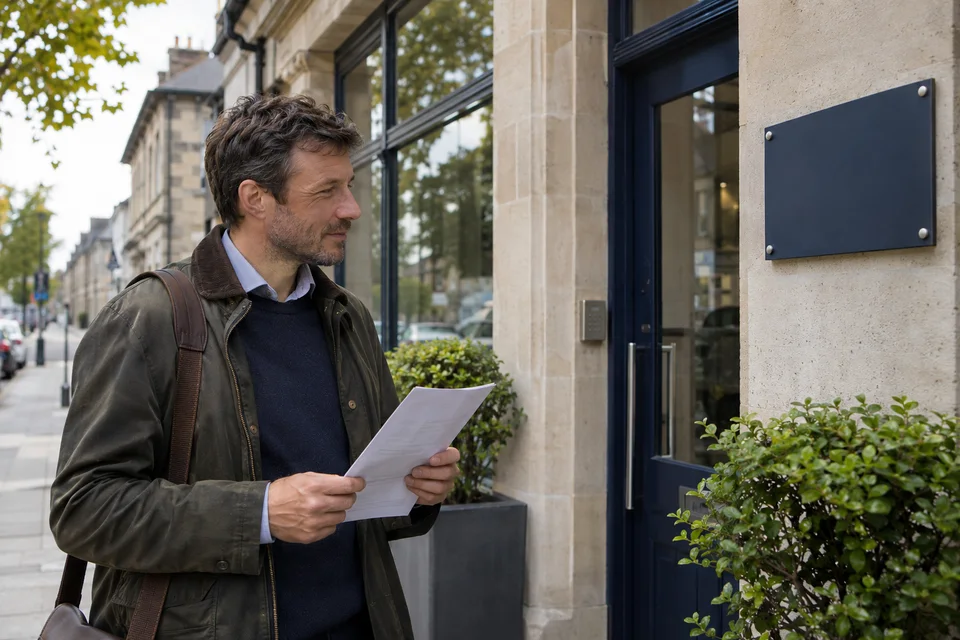
Before disclosing sensitive information, confirm who you are dealing with. Check the business name, company registration where applicable, trading address, telephone details and named investigator. A professional website is useful but can be created quickly; independent records provide better reassurance.
Our about Trojan Investigations page explains who we are and how clients can contact us directly. Any investigator should make it straightforward to establish the identity of the person or organisation taking responsibility for the instruction.
Check Data-Protection Arrangements
Private investigators routinely process personal information. Under the Data Protection Act 2018, organisations that use personal information as controllers generally need to pay the ICO data-protection fee unless an exemption applies. The ICO maintains a public register of fee payers.
Registration is not a complete quality guarantee, but an investigator who handles significant personal data should be able to explain their lawful basis, privacy information, security, retention and individual-rights procedures. If they dismiss GDPR as irrelevant to investigation work, that is a serious warning sign.
Professional Membership Can Add Accountability — If You Check What It Means
Membership badges vary. Some are little more than paid listings; others involve vetting, insurance requirements, codes of conduct and disciplinary procedures. The Association of British Investigators, for example, states that full members are vetted for criminal convictions, professional indemnity insurance, financial probity and ICO registration, and it operates an ICO-approved UK GDPR Code of Conduct for investigative and litigation-support services.
Membership remains voluntary, so the absence of one badge does not automatically make an investigator unreliable. The useful question is whether the claimed membership can be verified and what standards sit behind it.
Relevant Experience Matters More Than a Long List of Services
A matrimonial surveillance case, complex corporate fraud, witness trace and digital-evidence instruction require different experience. Ask how often the investigator handles comparable work and what part they personally perform.
For sensitive personal instructions, our personal investigation services are work coveredd differently from commercial enquiries. For companies, our business investigation work focuses on the operational, legal and evidential needs of the organisation.

Ask What the Investigator Will Not Do
This is one of the best tests of professionalism. A reliable investigator should be prepared to refuse methods that are unlawful, disproportionate or outside the instruction.
Walk Away from Promises Like These
- “We can hack the account.”
- “We can get anyone's bank statements.”
- “We can pull the live location from any mobile phone.”
- “We can access protected police or government databases.”
- “We can guarantee we will catch them.”
- “We can put a tracker on any car.”
- “There are no data-protection rules for private investigators.”
Those claims are not signs of superior capability. They are reasons to question legality, evidence quality and the safety of your own involvement.
Agree the Work Before Paying a Retainer
The investigator should be able to describe the objective in plain language. “Investigate my partner” is too vague. “Establish whether the subject attends the specified address on these dates” is more measurable. “Find fraud” is too broad. “Verify whether these invoices and supplier relationships are genuine” can be investigated.
A precise work covered controls cost, reduces unnecessary intrusion and makes it easier to judge whether the work succeeded.
Understand the Fee Structure
Private investigation pricing varies by service, location, team size, travel, urgency, specialist equipment and reporting requirements. Reliable investigators explain the commercial model in advance.
| Cost area | What to clarify | Why it matters |
|---|---|---|
| Hourly or daily rate | What time is chargeable and is there a minimum deployment? | Prevents surprise bills when surveillance cannot start or ends early. |
| Retainer | Is it an advance against work, refundable balance or fixed fee? | Clarifies what happens to unused funds. |
| Travel | Are mileage, rail, flights, hotels or travel time extra? | Can materially change cross-country assignments. |
| Additional investigators | When would another operative be used and at what rate? | Some environments require more than one investigator. |
| Specialist services | Are digital forensics, process serving, searches or expert reports separate? | Avoids assuming every service is included in the headline price. |
| Reporting | Are written reports, photographs, video and solicitor liaison included? | The evidence product may be the main reason for the instruction. |
Beware of “success Rates” Without Context
A percentage sounds reassuring, but success means different things in different cases. Locating a person, obtaining a photograph, confirming no activity, serving documents and proving a fraud allegation cannot be rolled into one meaningful universal success rate.
Ask instead for an explanation of likely outcomes, what evidence is realistically obtainable and what factors could prevent success. Honest uncertainty is usually a stronger sign of competence than a guaranteed result.
Ask Who Will Actually Conduct the Work
Some agencies use subcontractors across the UK or overseas. That can be entirely legitimate, but the client should know who remains responsible for quality, data protection, instructions and reporting. Ask whether subcontractors are vetted, insured and bound by confidentiality and data-processing arrangements.
If the case may enter court, establish who could provide a witness statement about how evidence was gathered.
Evidence Handling Should Be Discussed Before Evidence Exists
A reliable investigator should have a plan for original photographs, video, notes, documents and client-supplied material. Ask how files are transferred, who can access them, how long they are retained and whether originals are preserved.
If the investigator cannot explain basic evidence handling, the problem may emerge only when a solicitor asks where a file came from or whether it was edited.
Legal Knowledge Should Be Practical Rather Than Performative
Private investigators are not substitutes for solicitors. They should nevertheless understand the legal boundaries of the methods they use: data protection, harassment, stalking, computer misuse, privacy, trespass, surveillance and evidential integrity.
A reliable investigator does not need to recite legislation in the sales call. They do need to explain why a proposed method is appropriate and recognise when the client should obtain legal advice.
Confidentiality Is More Than Saying “discreet”
Ask how the investigator protects information in practice. Who can see the case? Are reports sent through secure channels? Are sensitive documents stored on personal devices? Are cases discussed with third parties? What happens to data after the instruction ends?
Discretion is a process, not a slogan.
Check Reviews, but Do Not Treat Them as Proof
Reviews can provide useful signals about communication, professionalism and client experience, but investigation work is confidential and satisfied clients may never post publicly. Reviews can also be manipulated in any industry.
Use them as one part of a wider check, alongside verifiable business records, membership, insurance, terms and direct conversation.
What a Good Initial Consultation Should Feel Like
A Reliable Investigator Should:
- listen before recommending a service;
- ask what outcome you actually need;
- identify immediate safety or police-reporting issues;
- explain what is and is not realistically possible;
- challenge requests that are too broad or intrusive;
- discuss likely cost drivers;
- tell you what information would improve the investigation;
- avoid promising a predetermined result; and
- provide clear next steps in writing.
A 10-Point Reliability Checklist
Before Instructing Any Private Investigator, Can You Answer Yes to These?
- I know the legal identity of the investigator or business.
- I have verified the main contact details independently.
- The investigator has relevant case experience.
- Data-protection arrangements have been explained.
- Professional indemnity insurance is in place.
- Any professional membership claim can be verified.
- The proposed methods sound lawful and proportionate.
- Fees and expenses are clear in writing.
- I know what report or evidence I will receive.
- The investigator has not guaranteed an outcome they cannot control.
How We Plan Your Investigation
1. Understand the Problem
We ask what has happened and what decision the client is trying to make.
2. Screen Legality and Safeguarding
We check whether the request can properly be undertaken and whether police, safeguarding or legal advice should take priority.
3. Define Evidence and Method
We identify the least intrusive reasonable route to answer the question.
4. Explain Cost and Limitations
The client should understand what can change cost and why success cannot be guaranteed.
5. Report Objectively
We provide what the evidence shows, including findings that do not support the client's original suspicion.
Choose the Investigator Who Can Say “no”
The most reliable investigator is not necessarily the one who promises the most. It is often the one who can explain the law, narrow the objective, refuse unsafe methods and tell you when an investigation is unlikely to be worth the cost.
If you would like to discuss a case before deciding whether investigation is appropriate, you can book a confidential consultation with Trojan Investigations . We will explain the realistic options and limitations before any work is agreed.
Red Flags in the Sales Process
| Warning sign | Why it matters | Better standard |
|---|---|---|
| Pressure to pay immediately | Creates urgency before work covered and terms are understood | Written proposal, clear retainer terms and time to ask questions |
| Guaranteed result | The investigator cannot control the subject, records or evidence | Realistic outcomes, risks and stop points |
| Vague “database access” claims | May imply unlawful or unverifiable sources | Clear explanation of source categories and legal boundaries |
| No named investigator | You may not know who is responsible for the work | Identifiable case lead and escalation contact |
| No written work covered | Encourages mission creep and unexpected fees | Specific objective, methods, reporting and cost basis |
| Refusal to discuss data security | Your case may contain highly sensitive information | Clear privacy, retention and secure-transfer procedures |
Good Investigators Also Protect You from a Bad Instruction
Clients sometimes arrive angry, frightened or convinced that a particular person is responsible. We aim to not turn that emotion into unlimited surveillance. They should test whether the instruction has a legitimate purpose, whether the proposed target is correctly identified and whether the requested method is proportionate.
That protects the subject's rights, but it also protects the client. An unlawful or poorly designed investigation can waste money, contaminate evidence, damage litigation and expose the instructing person or organisation to complaints or legal consequences.
Ask About Conflicts of Interest
An investigator should be able to identify and manage conflicts before accepting an instruction. That can matter where the agency has previously worked for the subject, a connected company, the opposing solicitor or another party in the same dispute. A conflict can affect confidentiality, independence and whether information from one case can properly be used in another.
For legal matters in particular, tell the investigator the names of the principal parties early enough for a sensible conflict check before detailed confidential information is disclosed.
Frequently Asked Questions About How to Choose a Reliable Private Investigator
Practical answers about UK private-investigator licensing, professional bodies, insurance, ICO registration, fees, legal methods, evidence handling and the warning signs to avoid.
Do Private Investigators Need an SIA Licence in the UK?
Private investigation itself is not currently listed by the SIA as a licensable activity. An investigator may hold an SIA licence for separate regulated security work, but that licence should not be presented as a universal private-investigator licence.
How Can I Verify a Private Investigator Is Legitimate?
Confirm the legal business identity, trading address, named investigator and contact details. Check relevant public records, ICO registration where applicable, professional-body membership claims and insurance rather than relying only on a website or badge.
Should a Private Investigator Be Registered with the ICO?
Many investigators process personal information as data controllers and will need to pay the ICO data-protection fee unless an exemption applies. The investigator should be able to explain their data-protection status and compliance procedures.
What Insurance Should a Private Investigator Have?
Professional indemnity insurance is an important protection because it covers certain professional liabilities arising from the work. Depending on the business, other insurance may also be relevant. Ask for confirmation of appropriate current cover.
Is Membership of a Professional Body Important?
It can provide useful accountability if the body has meaningful admission standards, a code of conduct, insurance requirements and disciplinary procedures. Membership is voluntary, so clients should verify what the particular organisation actually requires rather than assuming every badge means the same thing.
What Questions Should I Ask Before Hiring an Investigator?
Ask about comparable experience, who will conduct the work, proposed methods, legal limits, fees, expenses, evidence handling, subcontractors, reporting and what could prevent success. A competent investigator should answer clearly without promising certainty.
Should I Choose the Investigator with the Highest Success Rate?
Not necessarily. Success means different things across tracing, surveillance, fraud and legal work, so a single percentage may be meaningless. Ask for realistic outcomes and limitations for your particular case instead.
Can a Reliable Investigator Guarantee Results?
No. An investigator can control planning and professional effort but cannot control another person's behaviour, available records, witness cooperation or what evidence exists. Guaranteed outcomes are a warning sign.
What Illegal Methods Should Make Me Walk Away?
Claims of hacking accounts, accessing protected police or bank databases, obtaining live phone locations without authority, placing trackers anywhere or guaranteeing secret access to private communications should make you question the provider immediately.
How Are Private Investigators Normally Paid?
Models vary and may include hourly rates, fixed-fee searches, daily surveillance rates or retainers. Travel, additional investigators, specialist services and reports may be separate. The important point is that the charging structure is explained in writing before work starts.
Can a Solicitor Recommend a Private Investigator?
Yes, solicitors may have investigators they have used for litigation support, process serving, tracing or evidence work. A referral is useful but you should still understand the investigator's work covered, fees and responsibility for the instruction.
What Should a Private Investigator's Report Contain?
The format depends on the case, but a professional report should identify the instruction, sources or observations, dates and times, evidential limitations and a clear distinction between fact and inference. Original media should be preserved where relevant.
Should I Check Online Reviews?
Yes, but treat them as one signal rather than proof. Investigation work is confidential and many genuine clients never post reviews. Verify independent business information, insurance, standards and direct communication as well.
Why Does Relevant Experience Matter So Much?
Different cases require different skills. A surveillance specialist may not be the best person for complex financial due diligence, and a corporate investigator may not routinely handle sensitive family tracing. Ask about genuinely comparable instructions.
Why Choose Trojan Investigations?
We work covered each instruction around a defined objective, discuss legal and practical limits before work begins, use evidence-led methods and provide clear reporting. Clients can contact us directly to establish whether investigation is appropriate before committing to a wider instruction.
Not Sure Where to Start?
Tell us what happened and what you need to establish. We’ll discuss the options before you decide.
BOOK A FREE CONSULTATION